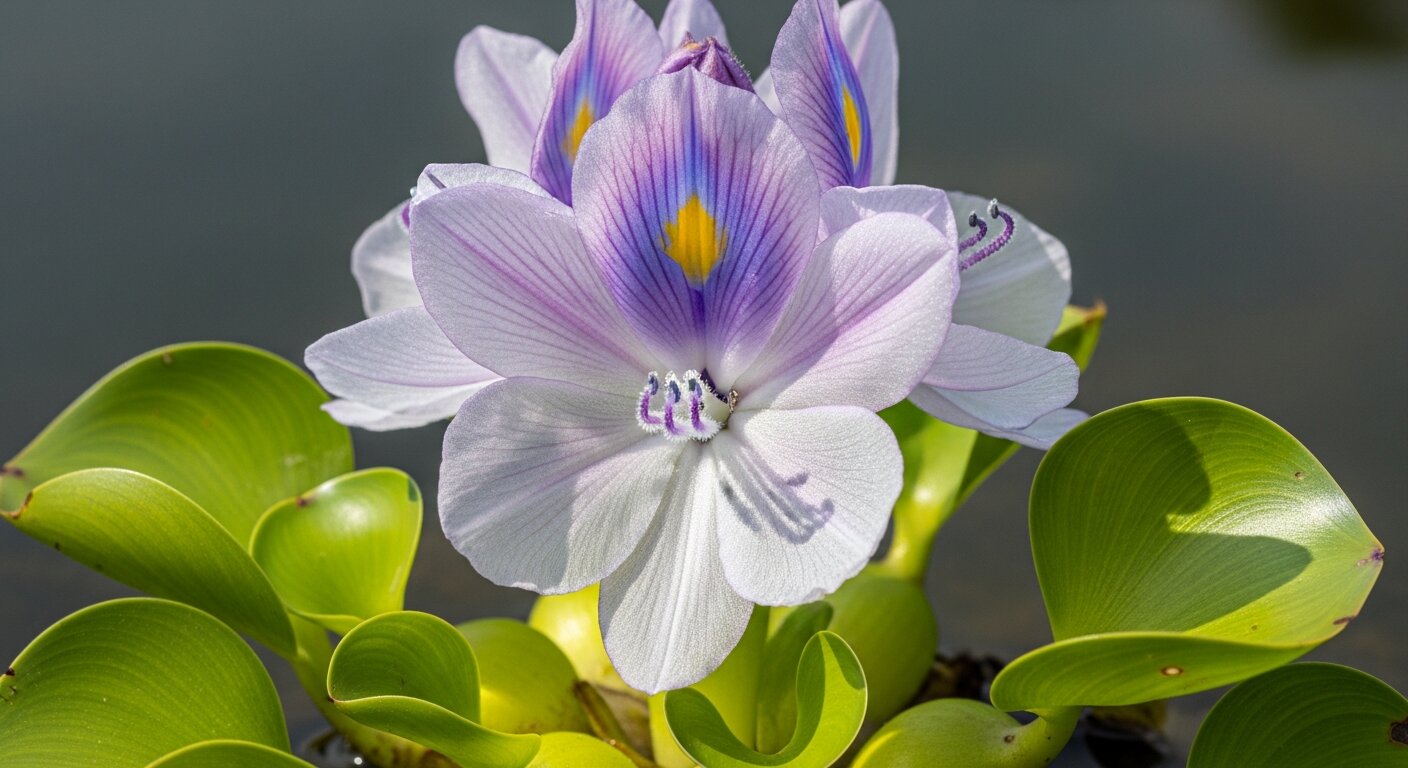
Water Hyacinth Research Network
An independent scientific resource dedicated to the study, documentation, and management of Eichhornia crassipes, commonly known as water hyacinth — one of the most ecologically and economically significant invasive aquatic plants worldwide.
Key Data Snapshot
Native Origin
Amazon Basin (South America)
Global Establishment
Established across multiple continents in tropical and subtropical regions.
Growth Capacity
Rapid vegetative expansion through stolons under nutrient-rich conditions.
Ecological Impact
Alters dissolved oxygen, light penetration, and freshwater biodiversity.
Management Approach
Requires integrated mechanical, chemical, and biological strategies.
Global Context
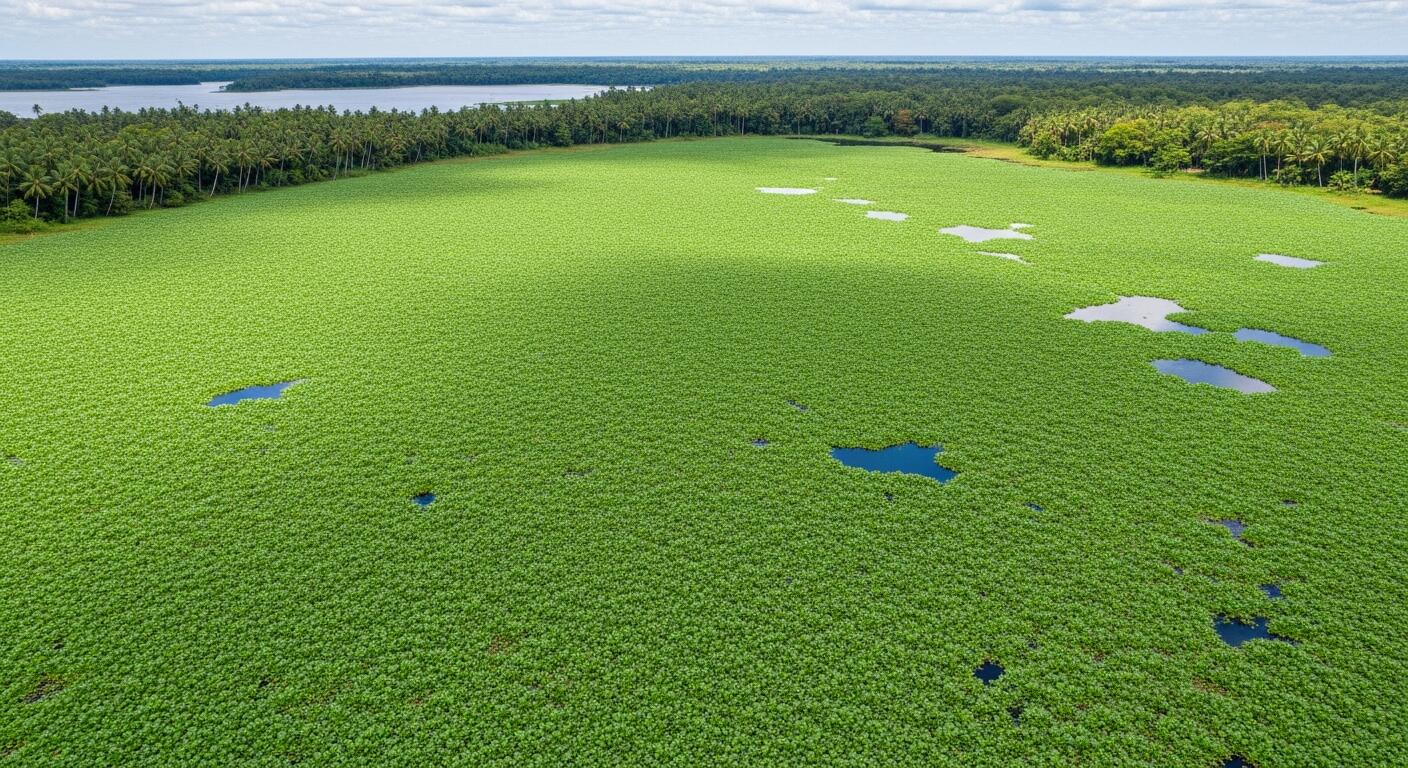
Native to the Amazon Basin, water hyacinth has established invasive populations across Africa, Asia, North America, and parts of Europe. Under nutrient-enriched conditions, populations can expand rapidly, forming dense floating mats that alter oxygen dynamics, obstruct navigation, and disrupt fisheries and irrigation systems.
- Established across multiple continents
- Capable of rapid vegetative reproduction
- Impacts biodiversity and hydrological systems
- Requires integrated management strategies
Core Research Areas
Biology & Physiology
Morphology, buoyancy structures, root systems, and adaptive traits.
Reproduction & Spread
Stolon growth, seed production, and dispersal mechanisms.
Ecological Impact
Effects on dissolved oxygen, biodiversity, and freshwater systems.
Mechanical Control
Harvesting operations, biomass logistics, and field considerations.
Chemical Management
Aquatic herbicide principles and treatment timing.
Biological Control
Weevils and integrated biological suppression strategies.
Global Distribution
Native origin, spread pathways, and major case studies.
Latest Research Updates
Weevils and other biocontrol agents, mechanisms, success factors, limitations.
Updated 2026-02-27
Plant anatomy, buoyancy adaptations, roots, flowers, and physiology of water hyacinth.
Updated 2026-02-27
Aquatic herbicide concepts, timing, selectivity, safety, and integrated planning.
Updated 2026-02-27
About This Resource
Water Hyacinth Research Network is a free, independent educational resource. All content is publicly accessible — no account, subscription, or payment required. The site synthesizes peer-reviewed science, government publications, and academic sources into structured, evidence-based articles covering Eichhornia crassipes biology, ecology, global distribution, and management.
The resource is designed for environmental professionals, lake managers, researchers, educators, regulators, and property owners seeking authoritative, clearly organized information. It is not affiliated with any state or federal agency and does not represent official guidance. Editorial policy governs how content is researched, written, and updated.
Research Structure & Citations
Articles are organized using structured headings, in-text citation formatting, and reference lists. Where indicated, references are pending verification and are updated as additional primary literature is reviewed.
This resource is designed to support environmental professionals, researchers, educators, and policymakers seeking structured, evidence-based information.