What Is Water Hyacinth?
Abstract
Eichhornia crassipes (Mart.) Solms, commonly known as water hyacinth, is a free-floating perennial aquatic macrophyte belonging to the family Pontederiaceae. Originally native to the Amazon Basin in South America, the species has proliferated across tropical and subtropical freshwater ecosystems on every inhabited continent. Its extraordinary vegetative reproduction rate, physiological resilience, and capacity for rapid biomass accumulation have earned it recognition as one of the most problematic invasive aquatic plant species in the world 1, 2. This article provides a comprehensive scientific overview of the taxonomy, morphology, reproductive biology, physiological adaptations, ecological consequences, economic impact, and management strategies associated with E. crassipes. The information presented herein synthesizes findings from decades of limnological, botanical, and ecological research, offering an institutional-quality reference for researchers, policymakers, and environmental managers engaged in the study and control of this formidable aquatic invader.
Taxonomy and Classification
Systematic Position
Water hyacinth was first described by the German-Brazilian naturalist Carl Friedrich Philipp von Martius in 1823 and was later formally classified by Hermann Maximilian Carl Ludwig Friedrich zu Solms-Laubach. The species is placed within the following taxonomic hierarchy:
- Kingdom: Plantae
- Clade: Tracheophytes
- Clade: Angiosperms
- Clade: Monocots
- Clade: Commelinids
- Order: Commelinales
- Family: Pontederiaceae
- Genus: Eichhornia
- Species: E. crassipes
The genus Eichhornia comprises approximately seven recognized species, all of which are aquatic or semi-aquatic plants native to the Neotropics. Among these, E. crassipes is by far the most ecologically significant and geographically widespread. Recent molecular phylogenetic studies have proposed reclassification of the Pontederiaceae family, with some taxonomists suggesting the merger of Eichhornia into a broader Pontederia sensu lato. However, the traditional nomenclature remains widely used in ecological and management literature.
Common Names
The species is known by a variety of vernacular names across its global range, including water hyacinth (English), jacinto de agua (Spanish), jacinthe d'eau (French), aguape (Portuguese), and various local appellations in African and Asian languages. These naming conventions reflect the plant's ubiquitous presence in tropical and subtropical water bodies worldwide.
Native Range and Global Expansion
Origin in South America
Eichhornia crassipes is indigenous to the Amazon Basin, where it occurs naturally in slow-moving rivers, floodplain lakes, wetlands, and seasonally inundated areas across Brazil, Colombia, Venezuela, Ecuador, and Peru. In its native habitat, the species exists in ecological equilibrium with a complex assemblage of herbivores, pathogens, and competing macrophytes that collectively regulate its population density 1. Natural enemies include several species of weevils (Neochetina spp.), moths (Niphograpta albiguttalis), and fungal pathogens that suppress vegetative growth and reproductive output.
History of Introduction
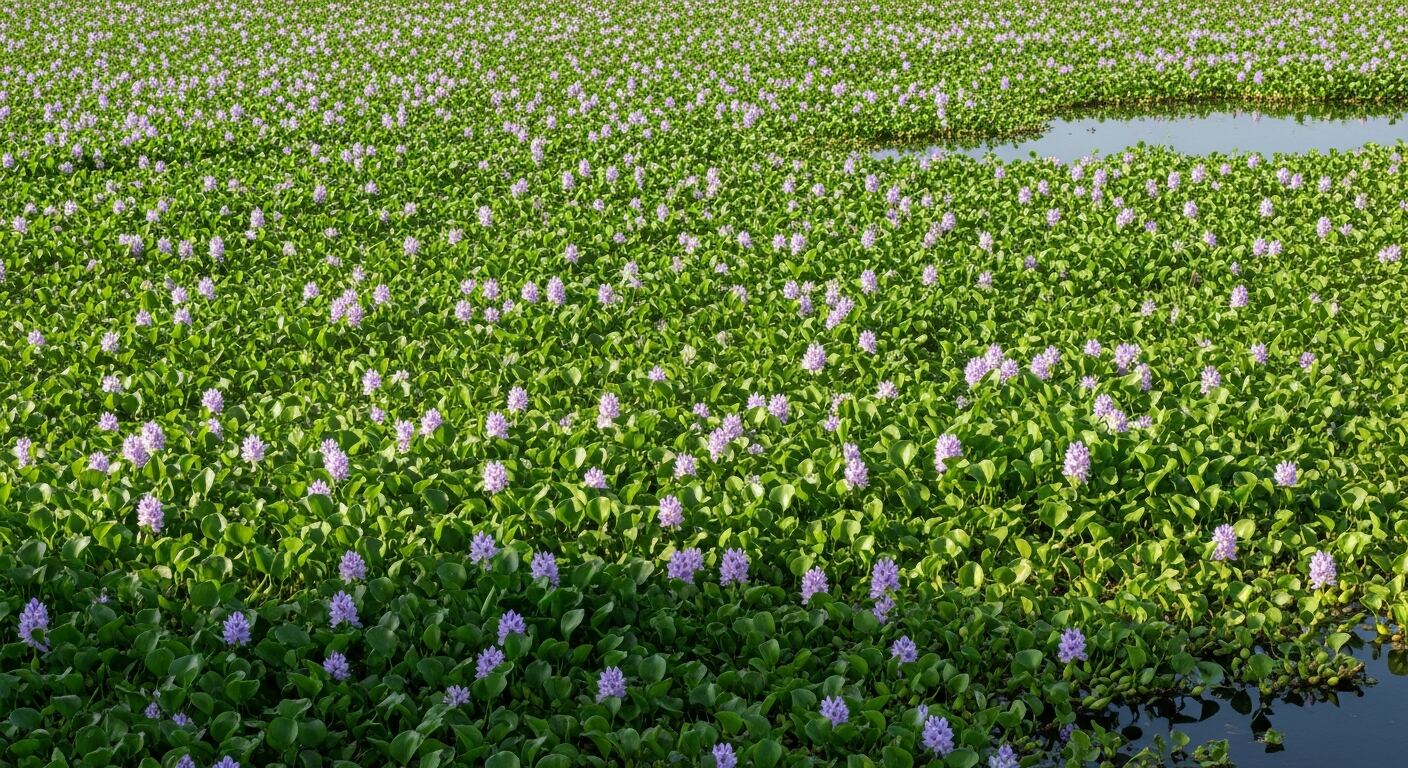
The global dispersal of water hyacinth is largely attributable to its ornamental appeal 3. The species was introduced to North America in 1884 at the World's Industrial and Cotton Centennial Exposition in New Orleans, Louisiana, where visitors were captivated by its striking lavender flowers. From this initial introduction, the plant rapidly colonized waterways throughout the southeastern United States. Similar introductions occurred across Africa, Asia, and Australasia during the late nineteenth and early twentieth centuries, driven by horticultural trade and aquatic garden culture.
Current Global Distribution
Today, E. crassipes is established on every continent except Antarctica. It is particularly problematic in sub-Saharan Africa, where massive infestations have been documented in Lake Victoria, Lake Malawi, the Congo River system, and the Nile River Basin. In Southeast Asia, the species has colonized major river systems including the Mekong, Chao Phraya, and Ganges-Brahmaputra deltas. In North America, persistent populations occur throughout Florida, Louisiana, Texas, and California. The species thrives in tropical and subtropical climates with mean annual temperatures above 15 degrees Celsius and is limited primarily by frost sensitivity at higher latitudes. For further discussion of global spread dynamics, see Reproduction and Spread.
Morphological Characteristics
Vegetative Structure
Eichhornia crassipes is a stoloniferous, free-floating hydrophyte that typically reaches heights of 30 to 100 centimeters above the water surface, though specimens exceeding 150 centimeters have been recorded in nutrient-rich environments. The plant body consists of several distinctive morphological features.
The root system is adventitious, fibrous, and densely branched, extending up to 300 centimeters below the water surface in deep-water environments. The roots are typically dark purple to black in coloration and are covered with fine root hairs that significantly increase the absorptive surface area. This extensive root system serves multiple functions, including nutrient uptake, water absorption, and stabilization within floating mats.
The leaves are arranged in a rosette pattern and exhibit considerable morphological plasticity depending on growth conditions. In uncrowded populations, individual plants produce bulbous, swollen petioles filled with aerenchyma tissue that provides buoyancy. These inflated petioles are a hallmark feature of the species and are responsible for the common name "water hyacinth," as they superficially resemble the bulbs of terrestrial hyacinths. Under crowded conditions, petioles become elongated and cylindrical as plants compete for light, and the characteristic bulbous form is largely absent.
The leaf blades are broadly ovate to circular, measuring 5 to 15 centimeters in diameter, with entire margins and a glossy, waxy upper surface. The laminae are thick and leathery, with prominent parallel venation characteristic of monocotyledonous plants.
Floral Morphology
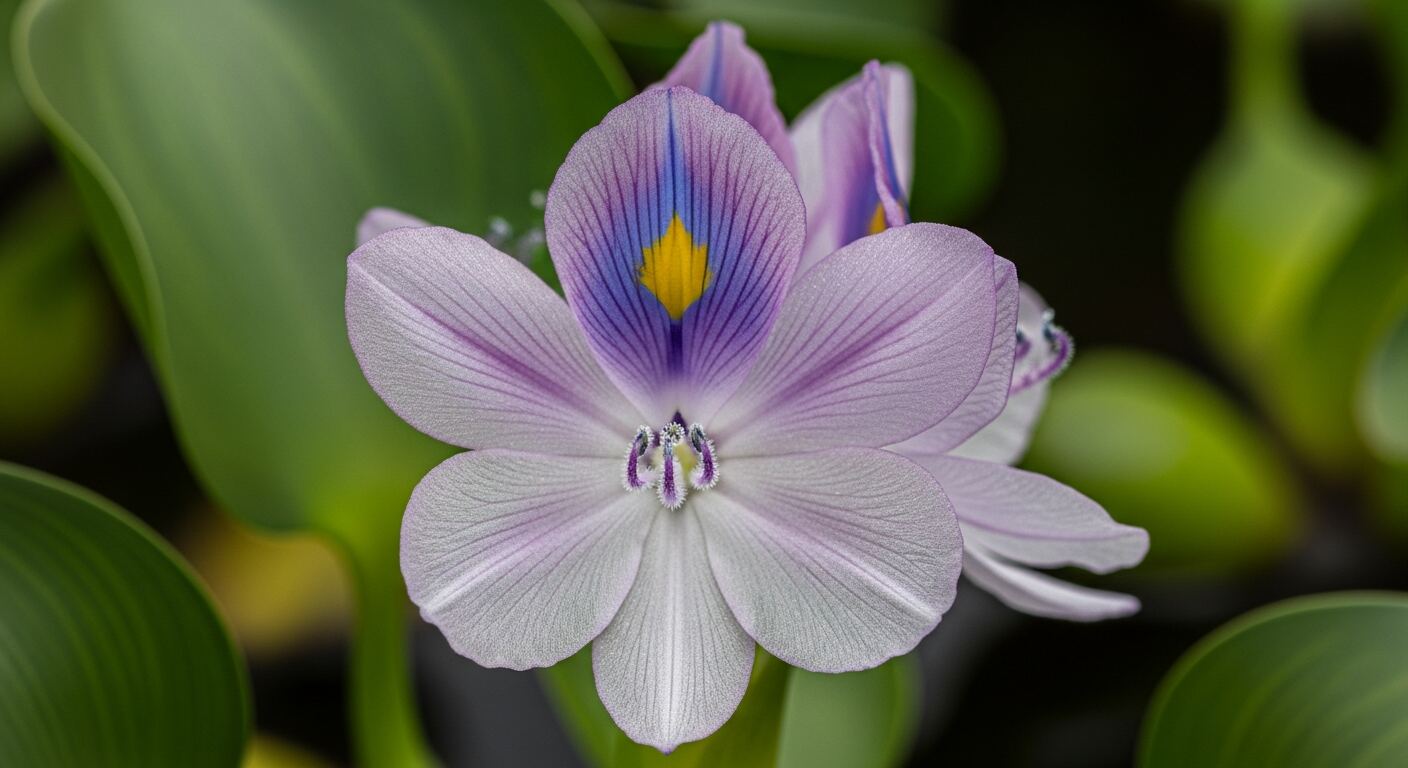
The inflorescence is a spike bearing 8 to 15 individual flowers, each approximately 4 to 7 centimeters in diameter. The perianth is bilaterally symmetrical and consists of six tepals fused at the base into a short tube. The uppermost tepal bears a distinctive yellow spot surrounded by a blue-violet border, which serves as a nectar guide for pollinating insects. The flowers are trimorphic with respect to style length, exhibiting long-styled, mid-styled, and short-styled forms, a condition known as tristyly. This reproductive system promotes outcrossing and maintains genetic diversity within sexually reproducing populations.
Reproductive Biology
Vegetative Reproduction
The primary mode of population increase in E. crassipes is asexual vegetative reproduction through stoloniferous growth. Daughter plants (ramets) are produced at the ends of horizontal stolons that extend laterally from the mother plant. Under optimal environmental conditions, a single plant can produce approximately 3,000 daughter plants within a 50-day period, resulting in a potential doubling time of as little as 6 to 18 days. This extraordinary rate of clonal propagation is the principal mechanism underlying the species' capacity for explosive population growth and rapid colonization of new habitats.
Fragmentation of existing mats by wind, wave action, boat traffic, or flooding also contributes to dispersal, as individual rosettes and stolon fragments are capable of establishing new populations at considerable distances from the parent colony. For a detailed examination of reproductive mechanisms and dispersal vectors, see Reproduction and Spread.
Sexual Reproduction
While vegetative reproduction dominates population dynamics, E. crassipes also reproduces sexually through seed production. Following pollination, typically mediated by hymenopteran insects, capsular fruits develop and release seeds that sink to the sediment. Seeds are remarkably long-lived, maintaining viability in sediment seed banks for up to 20 years under favorable conditions. This persistent seed bank represents a significant challenge for management programs, as new populations can emerge from dormant seeds long after the removal of standing vegetation.
Germination requirements include exposure to light, adequate moisture, and temperatures between 25 and 35 degrees Celsius. The seed bank serves as a critical reservoir for population recovery following disturbance events, including mechanical removal, herbicide application, and seasonal die-back in subtropical regions.
Physiological Adaptations
Nutrient Uptake and Tolerance
Eichhornia crassipes exhibits exceptional capacity for the uptake and accumulation of dissolved nutrients, particularly nitrogen and phosphorus. The species is classified as hypereutrophic, thriving in water bodies with elevated nutrient concentrations resulting from agricultural runoff, sewage discharge, and industrial effluent. Studies have demonstrated uptake rates of 2.4 to 4.8 milligrams of nitrogen per gram of dry weight per day and 0.4 to 1.2 milligrams of phosphorus per gram of dry weight per day under experimental conditions.
The plant's capacity for heavy metal bioaccumulation has attracted considerable research interest. E. crassipes has been shown to accumulate significant concentrations of cadmium, chromium, copper, lead, mercury, nickel, and zinc in its root and shoot tissues. This phytoremediation potential has led to proposals for utilizing the species in constructed wetland systems for wastewater treatment, though the subsequent disposal of contaminated biomass presents logistical and environmental challenges.
Aerenchyma and Buoyancy
The inflated petioles of E. crassipes contain extensive aerenchyma tissue, consisting of large, gas-filled intercellular spaces that constitute up to 70 percent of the petiole volume. This spongy tissue provides buoyancy, maintains the photosynthetic surfaces above the waterline, and facilitates internal gas transport for root aeration. The aerenchyma system allows the plant to thrive in hypoxic and anoxic aquatic environments where rooted macrophytes would be unable to establish.
Photosynthetic Efficiency
The species utilizes the C3 photosynthetic pathway and achieves exceptionally high rates of net primary productivity, with estimates ranging from 60 to 110 metric tons of dry biomass per hectare per year. This productivity rate is among the highest recorded for any vascular plant species and is comparable to that of intensively managed agricultural crops. The high photosynthetic output is supported by a large leaf area index, rapid leaf turnover, and efficient nutrient recycling within the plant body.
Ecological Consequences
Biodiversity Impacts
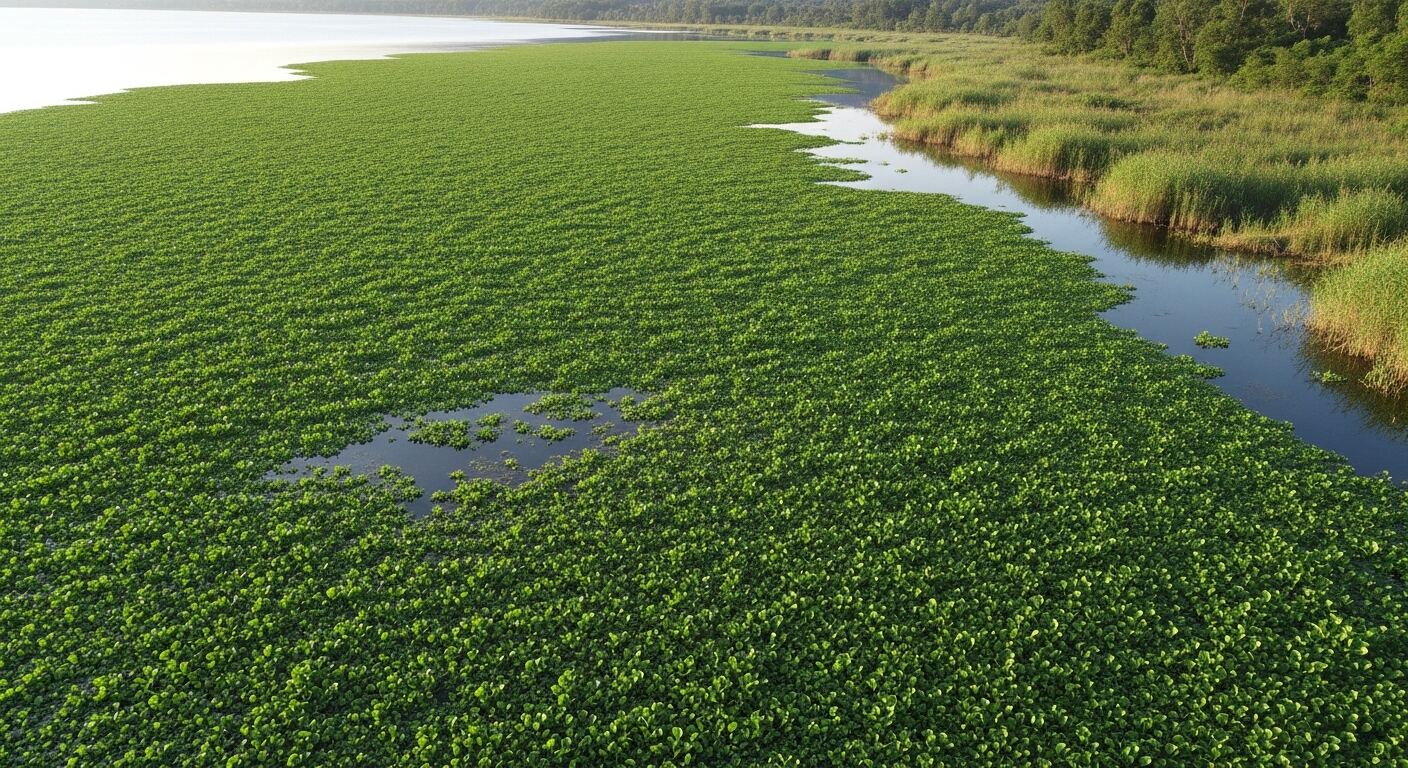
Dense infestations of E. crassipes profoundly alter the structure and function of freshwater ecosystems. The formation of extensive floating mats, which can cover hundreds or thousands of hectares, dramatically reduces light penetration to the water column, suppressing the growth of submerged aquatic vegetation and phytoplankton communities. The resulting decline in primary production beneath the mat leads to cascading effects throughout the aquatic food web.
Dissolved oxygen concentrations beneath water hyacinth mats are severely depleted due to the combined effects of reduced photosynthetic oxygen production, increased biological oxygen demand from decomposing plant material, and restricted atmospheric gas exchange at the water surface. Hypoxic and anoxic conditions beneath dense mats cause mortality among fish, macroinvertebrates, and other aerobic organisms, leading to significant reductions in aquatic biodiversity.
The physical structure of water hyacinth mats also alters habitat availability for aquatic fauna. While the dense root systems provide shelter for some invertebrate species and juvenile fish, the overall effect on native biodiversity is overwhelmingly negative. The displacement of native floating and emergent macrophytes reduces habitat heterogeneity and eliminates ecological niches upon which specialized species depend. For a comprehensive analysis of biodiversity impacts, see Ecological Impact.
Hydrological Effects
Water hyacinth infestations significantly alter the hydrological characteristics of affected water bodies. Dense mats increase evapotranspiration rates by 1.5 to 3.2 times compared to open water surfaces, accelerating water loss from lakes and reservoirs. The impedance of water flow by floating vegetation raises flood risk in riverine systems and reduces the operational capacity of irrigation canals and drainage networks.
Sedimentation rates are elevated beneath water hyacinth mats due to the trapping of suspended particulate matter by the dense root system. Over time, this accelerated sedimentation reduces the depth and volume of water bodies, contributing to the eutrophication and eventual terrestrialization of shallow lakes and wetlands.
Economic Impact
Agricultural and Fisheries Losses
The economic consequences of water hyacinth infestations are substantial and multifaceted. In agricultural regions, the blockage of irrigation canals and water intake structures by floating vegetation disrupts water delivery to cropland, resulting in reduced agricultural productivity and increased maintenance costs. The Food and Agriculture Organization of the United Nations has estimated that water hyacinth causes billions of dollars in annual economic losses across affected regions in Africa and Asia.
Fisheries are severely impacted by dense infestations, which restrict access to fishing grounds, damage nets and other gear, and reduce fish populations through habitat degradation and oxygen depletion. In Lake Victoria, where water hyacinth infestations peaked in the late 1990s, the livelihoods of millions of subsistence and commercial fishers were threatened by the species' explosive growth.
Infrastructure and Public Health
Water hyacinth obstructs navigation channels, hydroelectric power generation facilities, and municipal water supply intakes. The costs of mechanical removal and maintenance of critical infrastructure are considerable, often exceeding the financial and technical capacity of affected communities and governments. Dense mats also provide breeding habitat for disease vectors, including mosquitoes (Anopheles, Culex, and Aedes spp.) and freshwater snails (Biomphalaria spp.) that serve as intermediate hosts for schistosomiasis. The public health implications of these vector-borne diseases represent an additional dimension of the economic burden imposed by water hyacinth infestations.
Management Overview
Mechanical Control
Mechanical harvesting involves the physical removal of water hyacinth biomass using specialized equipment, including conveyor-belt harvesters, aquatic weed cutters, and dredging machinery. While mechanical methods provide immediate relief in localized areas, they are labor-intensive, costly, and generally insufficient for controlling large-scale infestations. The rapid regrowth capacity of the species means that mechanical removal must be conducted repeatedly, often at intervals of weeks to months, to prevent population recovery from residual plant material and seed banks.
Chemical Control
Herbicidal control relies on the application of aquatic-approved herbicides, primarily 2,4-dichlorophenoxyacetic acid (2,4-D), glyphosate, and diquat. These compounds are effective at reducing water hyacinth biomass when applied at appropriate concentrations and under favorable environmental conditions. However, chemical control raises significant concerns regarding non-target toxicity, water quality degradation, and the persistence of herbicide residues in aquatic ecosystems. Regulatory restrictions on herbicide use in drinking water sources and ecologically sensitive areas further limit the applicability of chemical methods.
Biological Control
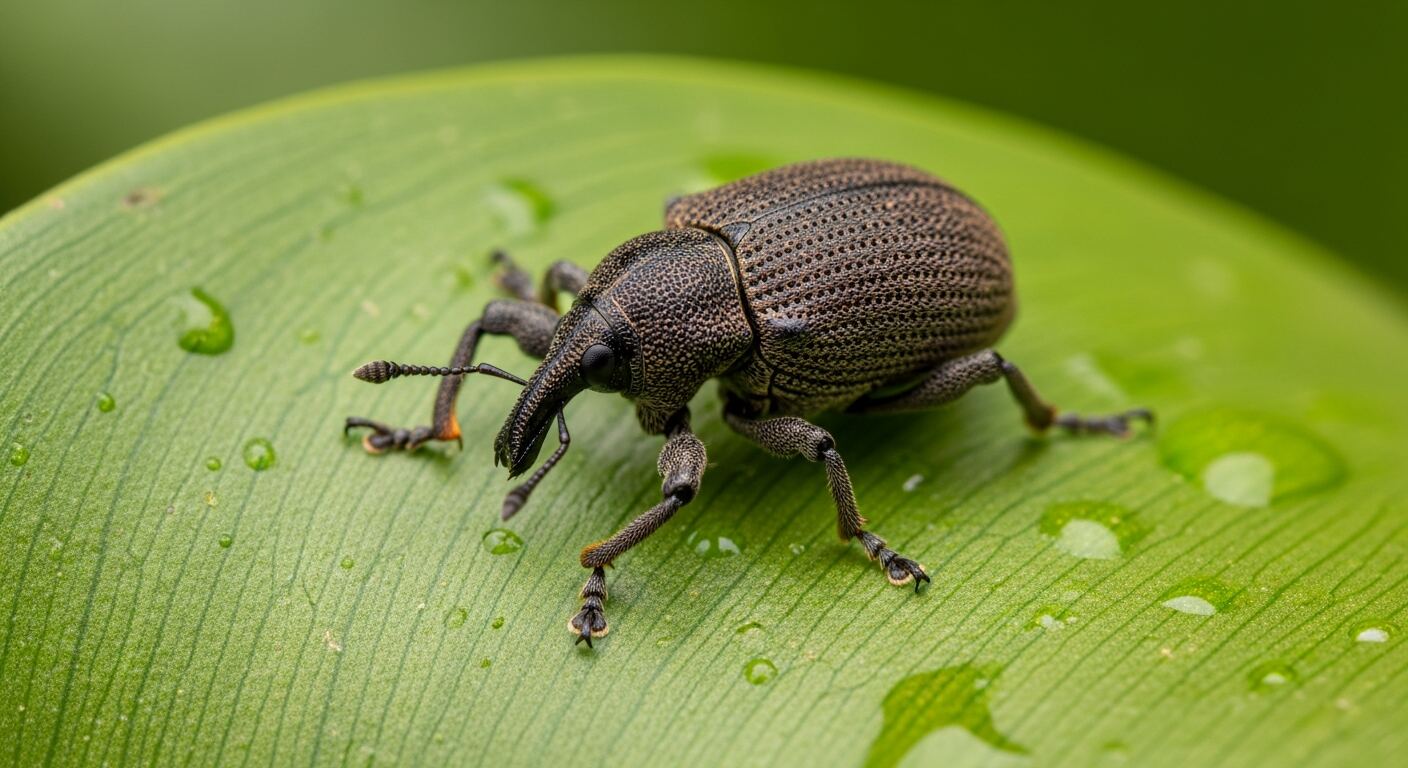
Classical biological control, involving the introduction of host-specific natural enemies from the plant's native range, represents the most sustainable long-term management strategy for E. crassipes. The two weevil species Neochetina bruchi and Neochetina eichhorniae have been released in more than 30 countries and have demonstrated significant efficacy in reducing water hyacinth populations over periods of several years. The moth Niphograpta albiguttalis and the fungal pathogen Cercospora piaropi have also been deployed as biological control agents with varying degrees of success.
Biological control does not eradicate the target species but rather reduces its population density to ecologically and economically tolerable levels. The effectiveness of biological control is influenced by climatic conditions, nutrient availability, and the presence of complementary management interventions. For a detailed review of control methodologies, see Biological Control and Mechanical Control.
Integrated Management
Contemporary best practices advocate for integrated management approaches that combine mechanical, chemical, and biological control methods in a coordinated framework. Integrated management strategies are designed to exploit the complementary strengths of individual control methods while minimizing their respective limitations. Effective integrated management requires sustained institutional commitment, adequate funding, stakeholder engagement, and adaptive management practices informed by ongoing monitoring and evaluation.
Conclusion
Eichhornia crassipes remains one of the most consequential invasive species affecting freshwater ecosystems globally. Its remarkable suite of morphological, physiological, and reproductive adaptations enables rapid population growth and environmental dominance across a wide range of climatic and trophic conditions. The ecological, economic, and public health impacts of water hyacinth infestations are profound and far-reaching, affecting biodiversity, water resources, agricultural productivity, infrastructure, and human welfare.
Addressing the challenge posed by water hyacinth requires a multidisciplinary approach integrating ecological research, policy development, community engagement, and the deployment of evidence-based management strategies. While significant progress has been achieved through biological control and integrated management programs, continued vigilance and investment are essential to prevent the reestablishment and spread of this formidable aquatic invader. The global research community must sustain its commitment to understanding the biology and ecology of E. crassipes in order to develop innovative and sustainable solutions for its management in the decades ahead.
References
-
Center, T. D., Dray, F. A., Jubinsky, G. P., & Grodowitz, M. J. (2002). Biological control of water hyacinth under conditions of maintenance management. Biological Control, 23(1), 109–123. https://doi.org/10.1006/bcon.2001.1000
-
FAO. (2018). Water Hyacinth Management Guidelines for Freshwater Systems. Food and Agriculture Organization of the United Nations. https://www.fao.org/publications
-
Gopal, B. (1987). Water Hyacinth. Elsevier Science Publishers. https://www.elsevier.com/books/water-hyacinth/gopal/978-0-444-42712-5
-
United States Geological Survey (USGS). (2021). Nonindigenous Aquatic Species Database: Eichhornia crassipes. https://nas.er.usgs.gov/queries/factsheet.aspx?SpeciesID=1130
-
Villamagna, A. M., & Murphy, B. R. (2010). Ecological and socio-economic impacts of invasive water hyacinth (Eichhornia crassipes): A review. Freshwater Biology, 55(2), 282–298. https://doi.org/10.1111/j.1365-2427.2009.02294.x
Frequently Asked Questions
What is water hyacinth and why is it invasive?
Water hyacinth (Eichhornia crassipes) is a free-floating aquatic plant native to South America that spreads aggressively through rapid vegetative reproduction and long-lived seed banks. It is considered invasive because it forms dense floating mats that block sunlight, reduce dissolved oxygen levels, disrupt aquatic ecosystems, and interfere with navigation, irrigation, and fisheries.
How fast does water hyacinth grow?
Under optimal tropical conditions, water hyacinth populations can double in as little as 6 to 18 days through clonal reproduction. A single plant can produce thousands of daughter plants within weeks, leading to exponential biomass accumulation in nutrient-rich freshwater systems.
Can water hyacinth be completely eradicated?
Complete eradication is extremely rare once the species is established. Long-lived seeds can remain viable in sediments for up to 20 years. Most management programs focus on long-term control through integrated mechanical, chemical, and biological strategies rather than total elimination.
Is water hyacinth useful for anything?
Although invasive, water hyacinth has been studied for wastewater phytoremediation, compost production, biofuel potential, and animal fodder in controlled settings. However, these uses require careful management to prevent unintended spread into natural waterways.
References
- Gopal, B. (1987). Water Hyacinth. Aquatic Plant Studies. Elsevier Science Publishers.
- Holm, L. G., Plucknett, D. L., Pancho, J. V., & Herberger, J. P. (1977). The World's Worst Weeds: Distribution and Biology. University Press of Hawaii.
- Penfound, W. T., & Earle, T. T. (1948). The Biology of the Water Hyacinth. Ecological Monographs, 18(4), 447–472.
Related Research
Weevils and other biocontrol agents, mechanisms, success factors, limitations.
Plant anatomy, buoyancy adaptations, roots, flowers, and physiology of water hyacinth.
Aquatic herbicide concepts, timing, selectivity, safety, and integrated planning.