Reproduction and Spread of Water Hyacinth (Eichhornia crassipes)
Key Takeaways
- Vegetative reproduction via stolons is the dominant mode of population increase in Eichhornia crassipes, enabling population doubling times of 6 to 18 days under favorable conditions.
- A single founding plant can produce approximately 3,000 genetically identical daughter ramets within a 50-day period under optimal temperature, light, and nutrient conditions.
- Sexual reproduction through seed production provides long-term population persistence, with seed banks remaining viable in sediments for up to 20 years.
- Small vegetative fragments bearing even a single node with attached roots can regenerate into complete, reproductively competent plants.
- Anthropogenic nutrient enrichment — particularly elevated nitrogen and phosphorus — is a primary driver of accelerated vegetative growth and spread.
- Understanding the interplay between vegetative and sexual reproduction is essential for designing effective, sustained management interventions.
Introduction
The extraordinary invasive success of Eichhornia crassipes across tropical, subtropical, and warm-temperate freshwater systems is fundamentally a consequence of its reproductive biology. The species employs a dual reproductive strategy: rapid vegetative (asexual) propagation through stoloniferous growth enables explosive short-term population expansion and local dominance, while sexual reproduction through seed production provides genetic diversity and long-term population resilience through persistent seed banks. Together, these complementary reproductive modes make water hyacinth exceptionally difficult to eradicate once established.
This article examines the mechanisms, rates, environmental drivers, and ecological implications of water hyacinth reproduction and dispersal. An understanding of these processes is essential for predicting invasion dynamics and for designing management strategies that address both the immediate biomass challenge and the long-term persistence of the species. For background on the species, see What Is Water Hyacinth?.
Vegetative Reproduction
Stolon Growth and Ramet Production
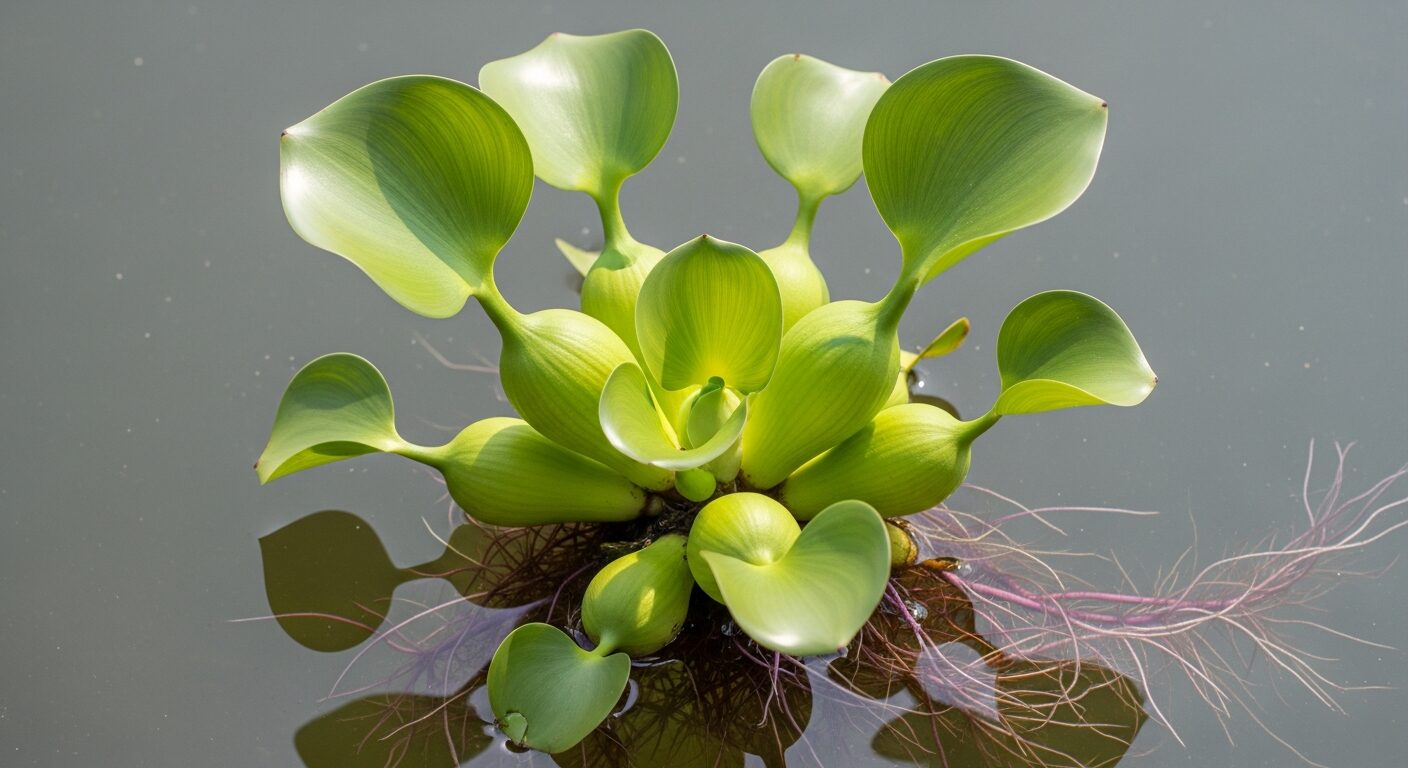
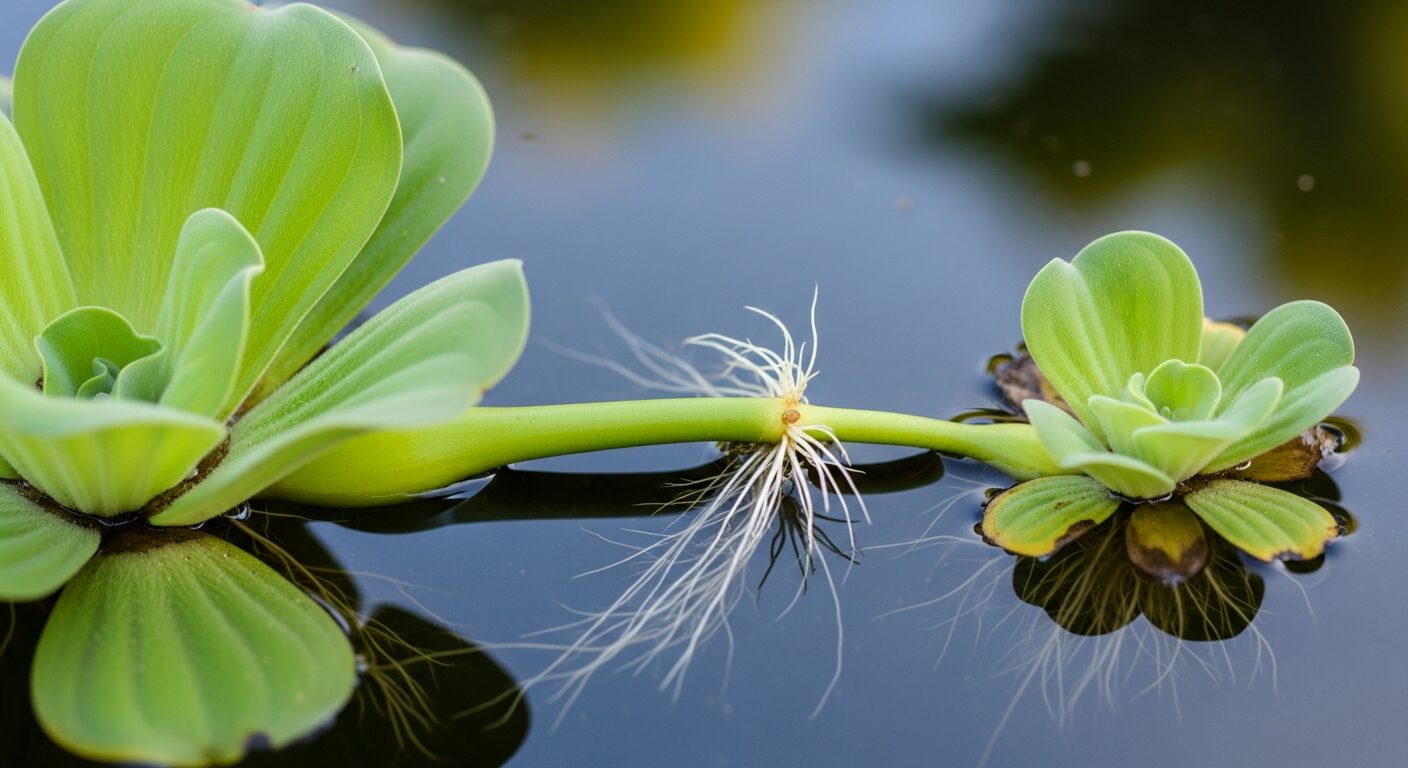
The primary mechanism of population increase in E. crassipes is clonal propagation through stolons — horizontal vegetative stems that emerge from the axillary buds of the mother plant and extend laterally across the water surface. Each stolon produces a genetically identical daughter rosette (ramet) at its tip. The daughter plant rapidly develops its own adventitious root system and leaf canopy, becoming physiologically independent within days of initiation. Once established, each ramet is itself capable of producing additional stolons, creating an exponentially expanding network of interconnected plants.
Stolons typically measure 10 to 30 centimeters in length and may be produced in rapid succession from multiple axillary buds simultaneously. The stoloniferous growth habit generates structurally cohesive floating mats in which mother plants, stolons, and daughter ramets are physically interlocked, creating a unified vegetative structure that can resist moderate wind and wave disturbance.
Growth Rates Under Optimal Conditions
Under optimal environmental conditions — water temperatures of 25 to 30 degrees Celsius, high dissolved nutrient concentrations, full sunlight, and adequate growing space — the vegetative growth rate of E. crassipes is among the highest recorded for any vascular plant. Experimental and field studies have consistently demonstrated population doubling times of 6 to 18 days, with the most rapid doubling occurring in warm, eutrophic tropical waters.
At these rates, a single founding plant can produce approximately 3,000 daughter ramets within a 50-day period. This means that a small introduction of even a few plants to a previously uninfested water body can, within two to three months, generate a population capable of covering hectares of water surface. The practical consequence is that delays of even a few weeks in detecting and responding to new infestations can allow the population to expand by orders of magnitude, dramatically increasing the cost, difficulty, and duration of effective intervention.
The fresh biomass accumulation rates associated with these doubling times are correspondingly extreme. Under ideal conditions, water hyacinth can produce 60 to 110 metric tons of fresh biomass per hectare per year, rivaling the productivity of intensively managed terrestrial crops such as sugarcane and exceeding that of virtually all native aquatic macrophyte competitors.
Environmental Factors Influencing Vegetative Reproduction
The rate of vegetative reproduction is strongly modulated by several interacting environmental variables:
Temperature. Temperature is the single most important abiotic factor governing water hyacinth growth. Stolon production ceases below approximately 10 degrees Celsius, proceeds slowly between 15 and 20 degrees Celsius, and reaches maximum rates between 25 and 30 degrees Celsius. Sustained temperatures above 35 degrees Celsius can inhibit growth. Frost is lethal to aerial tissues, and prolonged exposure to near-freezing temperatures kills entire plants. This thermal sensitivity defines the geographic limits of the species' distribution and confines year-round growth to tropical and subtropical latitudes.
Nutrient availability. Dissolved nitrogen and phosphorus concentrations in the water column directly correlate with biomass production and ramet output. Water hyacinth exhibits a strong positive growth response to elevated nutrient levels, and the most severe infestations globally are associated with eutrophic water bodies receiving agricultural runoff, municipal sewage, or industrial effluent. Phosphorus is frequently the limiting nutrient in freshwater systems, and even modest increases in phosphorus availability can trigger significant acceleration in vegetative growth.
Light intensity. As a C3 photosynthetic species, water hyacinth requires substantial light for maximum productivity. Full sunlight conditions support the highest rates of carbon fixation and biomass accumulation. Shading reduces stolon production and ramet initiation, though the species can maintain positive net growth at moderate light levels.
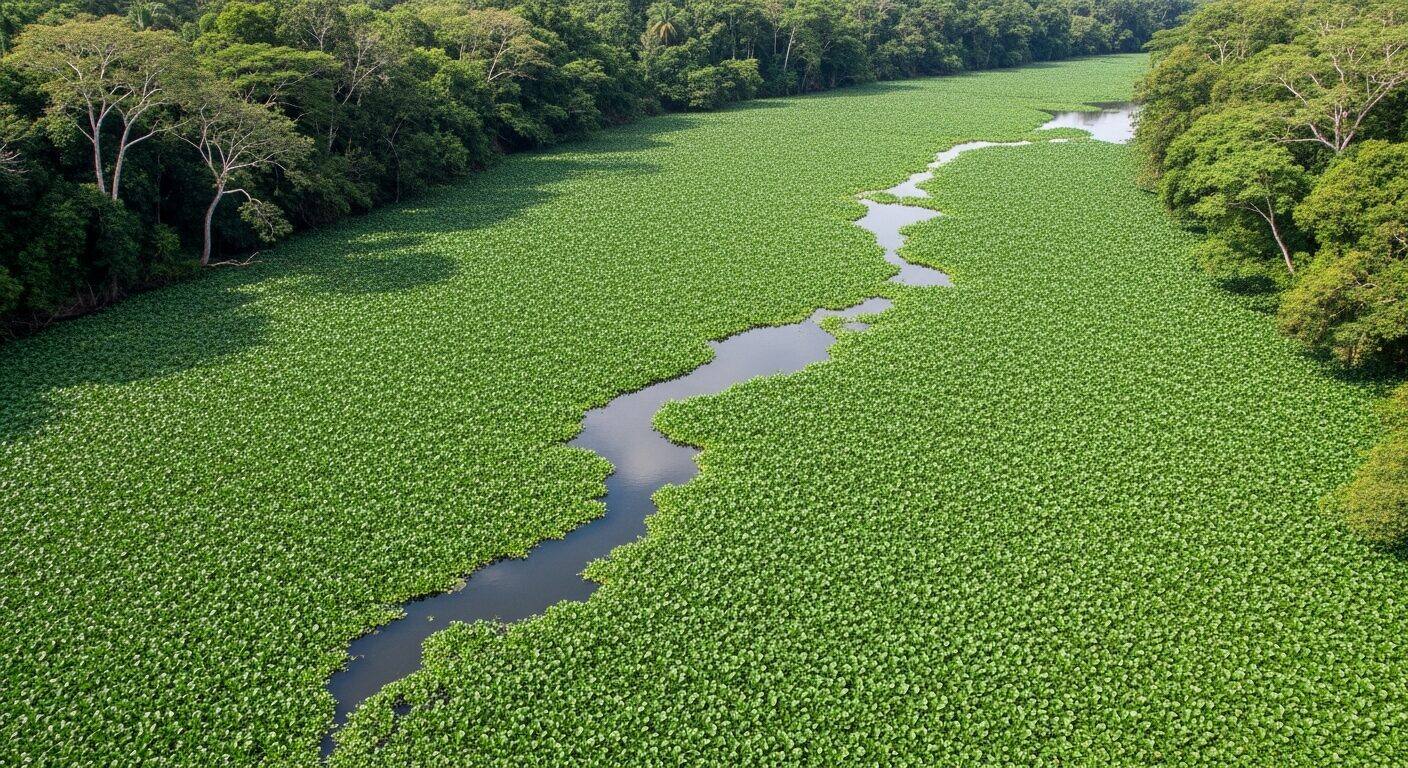
Population density. In dense, crowded stands, intraspecific competition for light triggers a shift in resource allocation. Individual plants invest more biomass in vertical elongation of petioles to position leaves above competitors and proportionally less in lateral stolon production. This density-dependent feedback provides a partial self-regulating mechanism, though it does not prevent the formation of extensive monospecific mats that can extend for kilometers along shorelines and across open water.
Sexual Reproduction
Pollination Biology
Eichhornia crassipes produces conspicuous inflorescences — terminal spikes bearing 8 to 15 individual flowers, each approximately 4 to 7 centimeters in diameter, with pale lavender to violet petals. The uppermost petal bears a distinctive yellow spot that functions as a nectar guide for pollinating insects, particularly hymenopteran visitors such as bees.
The species is tristylous, possessing three distinct floral morphs — long-styled, mid-styled, and short-styled — in which the style and stamens are positioned at different heights within the flower. This morphological polymorphism promotes outcrossing between different morphs (legitimate pollination) and reduces the frequency of self-fertilization, thereby maintaining genetic diversity within sexually reproducing populations.
Seed Production and Viability
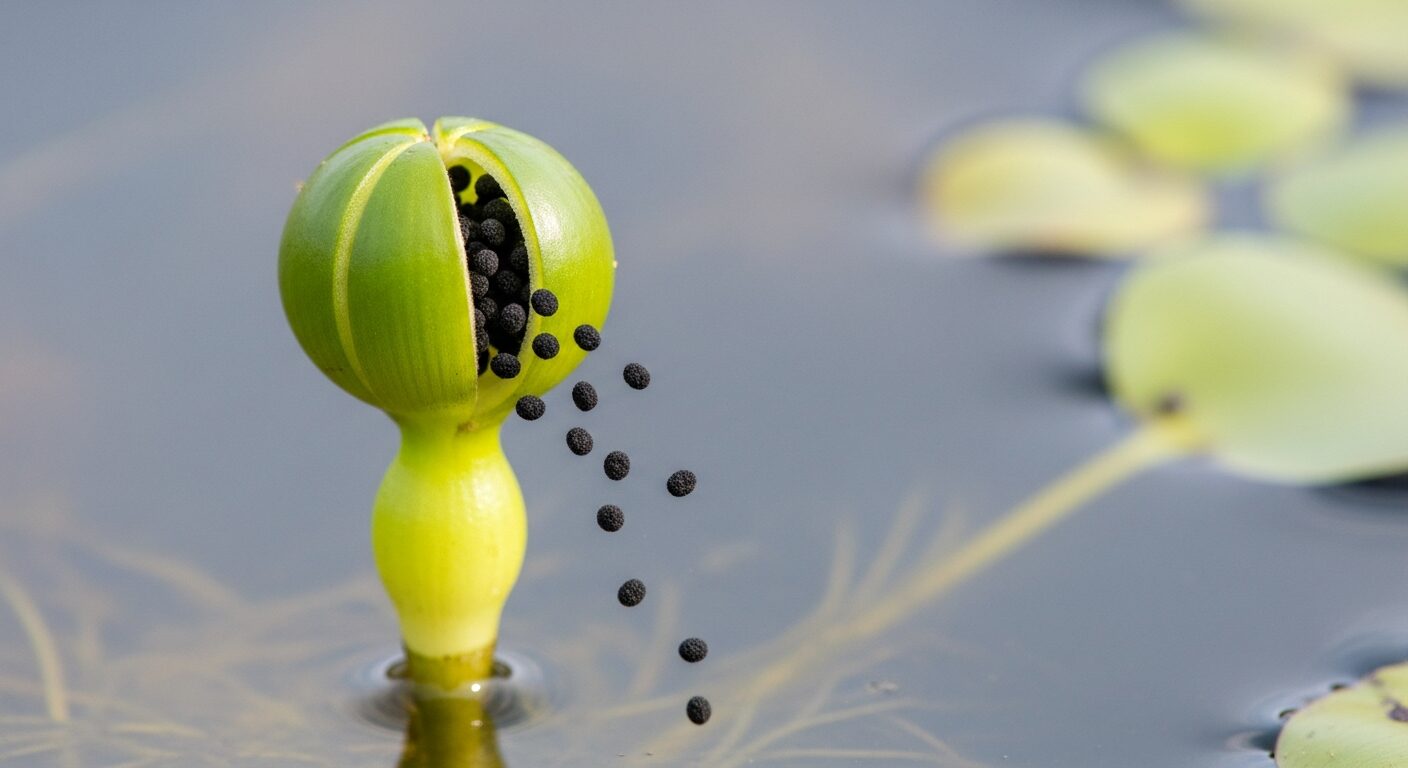
Following successful pollination, capsular fruits develop over a period of approximately two to three weeks. Each capsule contains numerous small, hard-coated seeds. Upon dehiscence, seeds are released into the water column and, being negatively buoyant, sink to the sediment surface.
The seeds of E. crassipes are remarkably long-lived. Under favorable conditions of darkness, moisture, and moderate temperature in the sediment environment, seed viability can persist for up to 20 years. Seed dormancy is maintained by the impermeable seed coat, which prevents water uptake until physical scarification, chemical degradation, or microbial action compromises the coat integrity.
Germination requirements include exposure to light (indicating the seed has been transported to or near the sediment surface), adequate moisture, and temperatures between 25 and 35 degrees Celsius. These requirements ensure that germination occurs predominantly in shallow, warm, well-lit environments where conditions are favorable for seedling establishment.
The persistent seed bank represents one of the most significant challenges for water hyacinth management. Even after the complete removal of all standing vegetation through mechanical harvesting, herbicide treatment, or sustained biological control, dormant seeds in the sediment can give rise to new populations months or years later when environmental conditions become favorable. This reproductive insurance mechanism necessitates long-term monitoring and rapid response protocols that extend well beyond the initial period of active management.
Genetic Implications of Sexual Reproduction
Although vegetative reproduction dominates day-to-day population growth, sexual reproduction — when it occurs — generates genetically diverse offspring that may differ in ecologically important traits. These traits include growth rate, nutrient uptake efficiency, cold tolerance, herbicide sensitivity, and susceptibility to biological control agents.
In many invasive populations outside the native South American range, only one or two style morphs are present, a consequence of founder effects during historical introduction events. The reduced morph diversity limits the efficiency of legitimate pollination and reduces seed set rates compared to fully trimorphic populations. However, even populations with a single morph can produce seeds through illegitimate (same-morph) pollination, albeit at lower frequencies.
The genetic variation generated through occasional sexual reproduction provides raw material for natural selection, potentially enabling invasive populations to adapt to local environmental conditions over multiple generations. This adaptive capacity may partially explain the success of water hyacinth across a remarkably broad range of climatic and ecological contexts.
Dispersal Mechanisms
Natural Dispersal Pathways
Water hyacinth dispersal within and between water bodies occurs through several natural mechanisms:
Hydrological transport. River and stream flows carry whole plants and vegetative fragments downstream, distributing propagules throughout connected waterway networks. Flood events are particularly effective dispersal agents, as rising waters lift floating mats from shoreline accumulations and transport them to previously uninfested tributaries, floodplain lakes, and backwater habitats.
Wind-driven surface movement. On lakes and reservoirs, wind action drives floating mats across the water surface, redistributing biomass from windward to leeward shorelines. This process can concentrate water hyacinth in sheltered bays and inlets, creating localized infestations of extreme density.
Wave-mediated fragmentation. Wave action and turbulence break apart large floating mats, producing individual rosettes and stolon fragments that function as viable propagules. These fragments can drift or be carried by currents to new locations, where they establish new colonies. The ability of small fragments to regenerate is a critical feature of the species' dispersal ecology.
Fragmentation and Regenerative Capacity
One of the most ecologically significant aspects of water hyacinth reproduction is the capacity of small vegetative fragments to regenerate into complete, reproductively competent plants. Fragments bearing even a single node with attached roots can, under favorable conditions, produce new leaves, initiate stolon growth, and establish independent ramets within days.
This regenerative capacity has profound implications for management. Mechanical harvesting operations that do not collect all fragments can inadvertently facilitate the spread of water hyacinth by distributing viable propagules throughout the water body. Similarly, boat traffic, fishing activities, and recreational watercraft can transport fragments between water bodies on hulls, trailers, and equipment, initiating new infestations at considerable distances from source populations.
Human-Mediated Dispersal
Human activities have been the primary driver of water hyacinth dispersal at regional and global scales. Historically, the ornamental aquatic plant trade was the most important vector for intercontinental introductions. The species was deliberately transported and cultivated across continents for its showy lavender flowers, beginning with its introduction to North America at the 1884 World's Industrial and Cotton Centennial Exposition in New Orleans.
Contemporary anthropogenic dispersal pathways include:
- Unintentional transport of plant fragments on boats, fishing gear, vehicle trailers, and construction equipment
- Movement of contaminated aquaculture stock and water garden plants between facilities and natural waterways
- Disposal of aquarium and ornamental pond plants into drainage systems and natural water bodies
- Construction of canals, irrigation networks, and impoundments that create novel hydrological connections between previously isolated water bodies
The combination of natural and human-mediated dispersal pathways ensures that water hyacinth has access to an expanding network of suitable habitats, particularly in regions undergoing agricultural intensification and hydrological modification.
Nutrient Enrichment and Eutrophication
Anthropogenic eutrophication of freshwater systems is among the most critical enabling factors for water hyacinth spread and population explosion. The relationship between nutrient loading and water hyacinth growth is direct and well documented.
Nitrogen and phosphorus, the two macronutrients most commonly elevated by human activities, are the primary drivers of water hyacinth biomass production. Agricultural runoff from fertilized fields, effluent from concentrated animal feeding operations, inadequately treated municipal sewage, and industrial wastewater discharge all contribute to nutrient loading in receiving water bodies. Under these enriched conditions, the growth rate of E. crassipes increases substantially, stolon production accelerates, and the species rapidly outcompetes native macrophytes that are adapted to lower nutrient regimes.
The feedback relationship between water hyacinth and nutrient dynamics is self-reinforcing. As water hyacinth biomass accumulates, the decomposition of senescent plant material releases nutrients back into the water column, further stimulating growth. This positive feedback loop can drive systems toward a state of permanent water hyacinth dominance that is resistant to reversal through nutrient reduction alone, particularly once the seed bank has become established in the sediment.
Effective management of water hyacinth therefore requires not only direct population control through mechanical, chemical, or biological methods, but also the reduction of anthropogenic nutrient inputs to affected water bodies. Without addressing the underlying eutrophication that fuels population growth, control efforts are unlikely to achieve lasting success.
Growth Rate Comparisons with Native Aquatic Plants
The growth rate of E. crassipes far exceeds that of virtually all co-occurring native aquatic macrophyte species, conferring an overwhelming competitive advantage in invaded ecosystems. While most native floating macrophytes — including species of Lemna, Salvinia, Pistia, and Azolla — exhibit population doubling times measured in weeks to months, water hyacinth achieves comparable or greater population increases in days.
This disparity in growth rate has several ecological consequences. First, water hyacinth rapidly monopolizes available surface area, intercepting light and excluding native species from the photic zone. Second, the species' superior nutrient uptake rates deplete dissolved nitrogen and phosphorus from the water column more efficiently than native competitors, further suppressing their growth. Third, the dense root system and interlocking mat structure of water hyacinth physically displaces smaller floating plants, reducing their access to both light and nutrients.
The only native macrophyte species that approach the growth rates of water hyacinth are certain duckweed species (Lemna spp., Spirodela spp.), which can exhibit doubling times as short as two to three days under laboratory conditions. However, in field settings, duckweed populations are typically constrained by environmental variability, herbivory, and competition, and they lack the structural capacity to form the massive floating mats characteristic of water hyacinth infestations.
Management Implications
The reproductive biology of E. crassipes imposes specific and demanding requirements on management strategies:
Early detection and rapid response. Given the exponential growth rate of water hyacinth populations, the window for cost-effective intervention is narrow. Populations that are not detected and addressed while still small can expand by orders of magnitude within weeks, transforming a minor management challenge into a major crisis.
Addressing the seed bank. Management programs that focus exclusively on the removal of standing vegetation without accounting for the persistent seed bank are unlikely to achieve lasting success. Sustained monitoring for germination events and rapid re-treatment must continue for years — potentially decades — following the initial reduction of standing biomass.
Fragment containment. Mechanical harvesting and transport operations must include measures to prevent the dispersal of viable vegetative fragments. Containment booms, fragment collection nets, and equipment decontamination protocols are essential components of responsible management practice.
Nutrient source reduction. Addressing the anthropogenic nutrient loading that drives water hyacinth proliferation is as important as direct population control. Watershed-scale nutrient management, including improved agricultural practices, upgraded wastewater treatment, and riparian buffer restoration, can reduce the environmental carrying capacity for water hyacinth and improve the long-term sustainability of control efforts.
Integrated approaches. No single control method is sufficient to address the full reproductive capacity of water hyacinth. Integrated management strategies that combine mechanical removal, herbicide application, and biological control agents — supported by long-term monitoring, stakeholder engagement, and sustained funding — offer the greatest prospect for maintaining populations at ecologically tolerable levels. For a comprehensive overview of control methods, see Biological Control and Mechanical Control.
Frequently Asked Questions
How quickly can water hyacinth spread across a lake?
Under optimal tropical conditions with warm temperatures, high nutrient availability, and abundant sunlight, water hyacinth populations can double every 6 to 18 days. A small initial colony of just a few plants can expand to cover hectares of water surface within two to three months. This exponential growth rate makes early detection and rapid response critical for preventing large-scale infestations.
Does water hyacinth spread primarily by seeds or by vegetative growth?
Vegetative reproduction through stolons is the dominant mode of spread and population increase. However, sexual reproduction through seeds plays a critically important complementary role by creating persistent seed banks in sediments. These seeds can remain viable for up to 20 years, providing a reservoir for population recovery long after standing vegetation has been removed.
Can a single water hyacinth plant start an entire infestation?
Yes. A single founding plant can produce approximately 3,000 genetically identical daughter plants within 50 days through stoloniferous vegetative reproduction under optimal conditions. This extraordinary clonal growth capacity means that even a single plant introduced to a favorable water body — whether through deliberate planting, accidental transport, or disposal — can initiate a large-scale infestation.
How do water hyacinth plants move between separate water bodies?
Movement between isolated water bodies occurs primarily through human activities. The most common vectors include boat traffic and fishing gear carrying attached plant fragments, disposal of aquarium and water garden plants into natural waterways, and the ornamental plant trade. Natural dispersal between water bodies occurs during flood events that connect normally separated systems and through the transport of fragments by waterbirds.
Why is nutrient pollution so closely linked to water hyacinth spread?
Water hyacinth exhibits a strong positive growth response to elevated concentrations of dissolved nitrogen and phosphorus. Eutrophic water bodies receiving agricultural runoff, sewage discharge, or industrial effluent provide ideal conditions for explosive population growth. High nutrient availability directly accelerates stolon production and biomass accumulation, enabling water hyacinth to outcompete native vegetation and form dense monospecific mats that dominate the water surface.
Related Research
Plant anatomy, buoyancy adaptations, roots, flowers, and physiology of water hyacinth.
Weevils and other biocontrol agents, mechanisms, success factors, limitations.
Aquatic herbicide concepts, timing, selectivity, safety, and integrated planning.