Chemical Control of Water Hyacinth
Key Takeaways
- Chemical control using aquatic-approved herbicides can effectively reduce water hyacinth biomass when applied correctly.
- The primary herbicides used are 2,4-D, glyphosate, and diquat, each with distinct modes of action and environmental profiles.
- Timing, dosage, and environmental conditions critically influence herbicide efficacy and non-target impacts.
- Regulatory restrictions on herbicide use in drinking water sources and ecologically sensitive areas limit applicability.
- Decomposition of chemically treated biomass can cause secondary oxygen depletion and water quality degradation.
- Chemical control is most effective as a component of integrated management strategies rather than as a standalone approach.
Introduction
Chemical control of Eichhornia crassipes involves the application of aquatic-approved herbicides to reduce or eliminate water hyacinth biomass in infested water bodies. Herbicidal control has been employed extensively in North America, Australia, and parts of Africa and Asia since the mid-twentieth century. While chemical methods can achieve rapid and substantial biomass reduction, their use raises significant concerns regarding environmental safety, non-target effects, water quality, and regulatory compliance. This article examines the principal herbicides used for water hyacinth control, their application methods, efficacy, environmental considerations, and role within integrated management frameworks. For a general overview of the species, see What Is Water Hyacinth?.
Principal Herbicides
2,4-Dichlorophenoxyacetic Acid (2,4-D)
2,4-D is a synthetic auxin herbicide that selectively targets broadleaf and dicotyledonous plants. When applied to water hyacinth, 2,4-D disrupts normal growth regulation, causing uncontrolled cell elongation, tissue deformation, and eventual plant death. The compound is effective against water hyacinth at relatively low application rates and has been widely used in the United States and other countries for aquatic weed management since the 1940s.
The selectivity of 2,4-D for broadleaf plants offers some protection to monocotyledonous native vegetation, though non-target effects on sensitive aquatic organisms and riparian plants remain a concern. Environmental persistence varies with formulation, water temperature, and microbial activity, with half-lives in aquatic systems typically ranging from several days to several weeks.
Glyphosate
Glyphosate is a broad-spectrum, non-selective systemic herbicide that inhibits the enzyme 5-enolpyruvylshikimate-3-phosphate synthase (EPSPS), disrupting aromatic amino acid biosynthesis. Aquatic formulations of glyphosate are applied directly to the foliage of emergent and floating aquatic plants. The compound is translocated throughout the plant body, affecting both above-water and submerged tissues.
Glyphosate is highly effective against water hyacinth when applied under appropriate conditions, including adequate leaf coverage, absence of rainfall for several hours following application, and active plant growth. The non-selective nature of glyphosate means that all contacted vegetation is affected, necessitating careful application to minimize impacts on desirable native species.
Diquat
Diquat is a contact herbicide that disrupts photosynthetic electron transport, generating reactive oxygen species that cause rapid desiccation and necrosis of treated plant tissues. Unlike systemic herbicides, diquat acts only on tissues directly contacted by the spray solution and is not translocated within the plant body. This mode of action produces rapid visible effects (browning and wilting within 24 to 48 hours) but may not kill root systems and rhizomes, allowing regrowth from surviving tissues.
Application Methods
Foliar Application
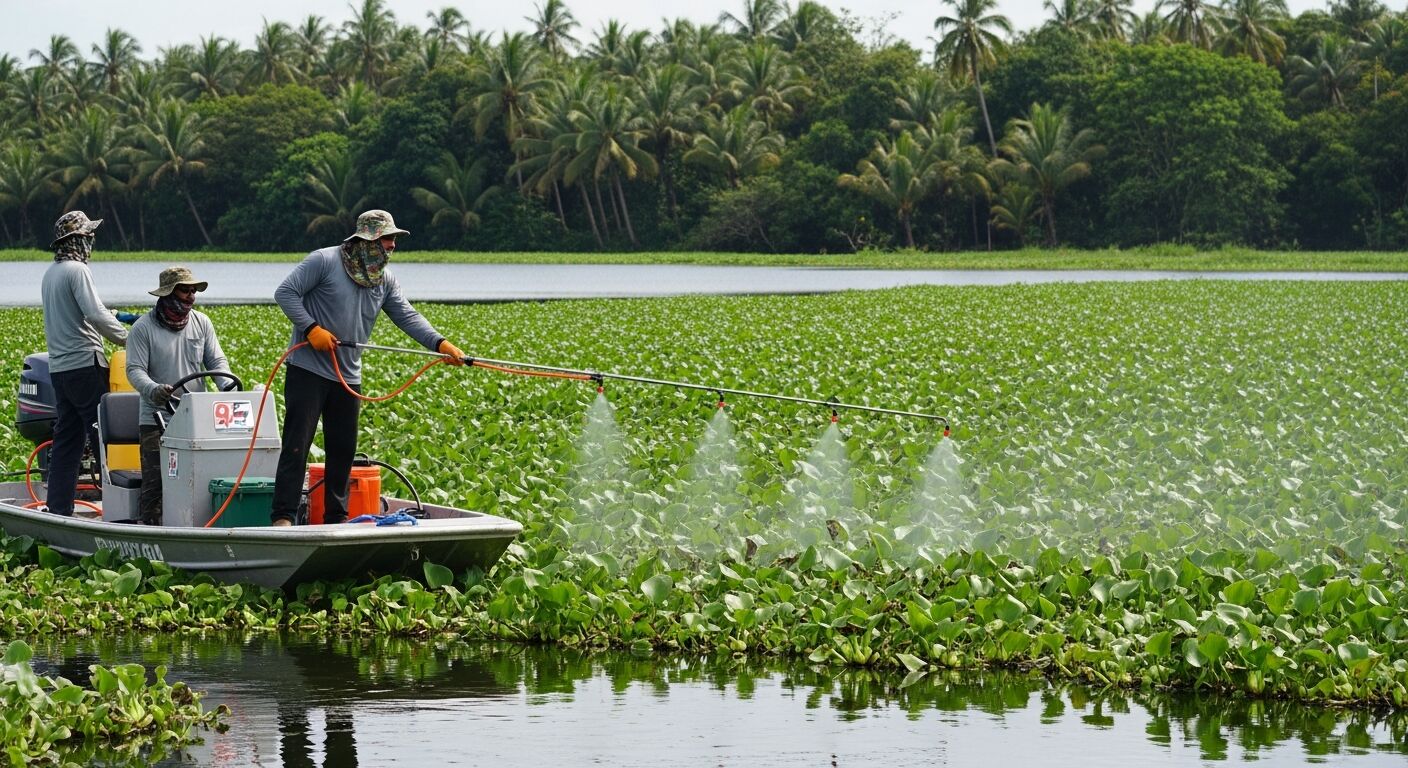
The most common method of herbicide application for water hyacinth control is foliar spraying from boats, airboats, or helicopter-mounted spray systems. Foliar application delivers the herbicide directly to the leaf surfaces of target plants, maximizing uptake and minimizing the quantity of chemical entering the water column. Application rates, nozzle configurations, and spray volumes are calibrated to achieve uniform coverage while minimizing drift to non-target areas.
Timing and Environmental Conditions
Herbicide efficacy is strongly influenced by the timing of application relative to the plant's growth cycle and prevailing environmental conditions. Optimal treatment timing coincides with periods of active growth, when translocation of systemic herbicides from leaves to roots and stolons is most efficient. Applications during dormant periods or under environmental stress (drought, cold temperatures) typically yield reduced efficacy.
Wind speed, air temperature, humidity, and the probability of rainfall all affect spray drift, herbicide uptake, and the duration of contact between the chemical and the plant surface. Most management programs recommend application during calm conditions with air temperatures between 20 and 30 degrees Celsius and no rainfall forecast for at least four hours.
Environmental Considerations
Non-Target Effects
The application of herbicides in aquatic environments carries inherent risks to non-target organisms and ecosystem processes. Direct toxicity to aquatic fauna varies among herbicide compounds, formulations, and exposure concentrations. Surfactants and adjuvants included in commercial herbicide formulations may be more toxic to aquatic organisms than the active ingredient itself, particularly for fish and amphibian larvae.
Indirect effects arise from the rapid decomposition of chemically treated water hyacinth biomass. The microbial breakdown of large quantities of dead plant material generates substantial biological oxygen demand, potentially causing secondary hypoxic or anoxic conditions in the water column. These oxygen depletion events can result in fish kills and invertebrate mortality that may be more ecologically damaging than the herbicide application itself.
Water Quality Impacts
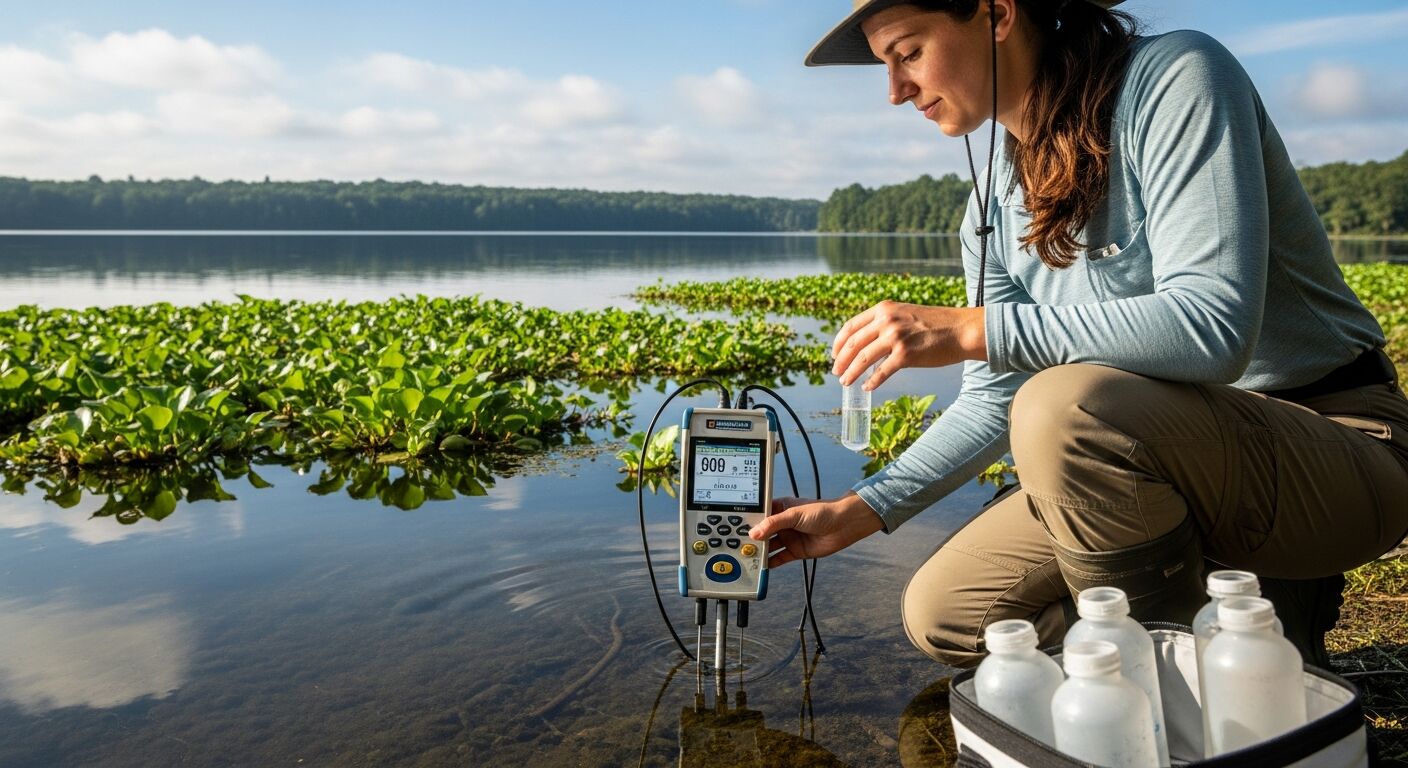
Herbicide residues in treated water bodies are a concern for human health and downstream water users, particularly when treatment occurs in or near drinking water sources, agricultural irrigation intakes, or aquaculture facilities. Regulatory agencies establish maximum permissible concentrations for aquatic herbicides in potable water supplies, and treatment programs must comply with these standards through careful application rate management and post-treatment water quality monitoring.
Regulatory Framework
The use of herbicides in aquatic environments is subject to regulatory oversight by national and regional environmental agencies. In the United States, aquatic herbicide use is regulated by the Environmental Protection Agency under the Federal Insecticide, Fungicide, and Rodenticide Act (FIFRA) and the Clean Water Act. Similar regulatory frameworks exist in other countries, though the stringency of enforcement and the range of approved compounds vary considerably.
Regulatory approval for aquatic herbicide use typically requires demonstration of efficacy against the target species, acceptable environmental risk profiles, and compliance with water quality standards. Restrictions on herbicide application near drinking water intakes, endangered species habitats, and recreational water bodies may significantly limit the areas where chemical control can be deployed.
Integration with Other Control Methods
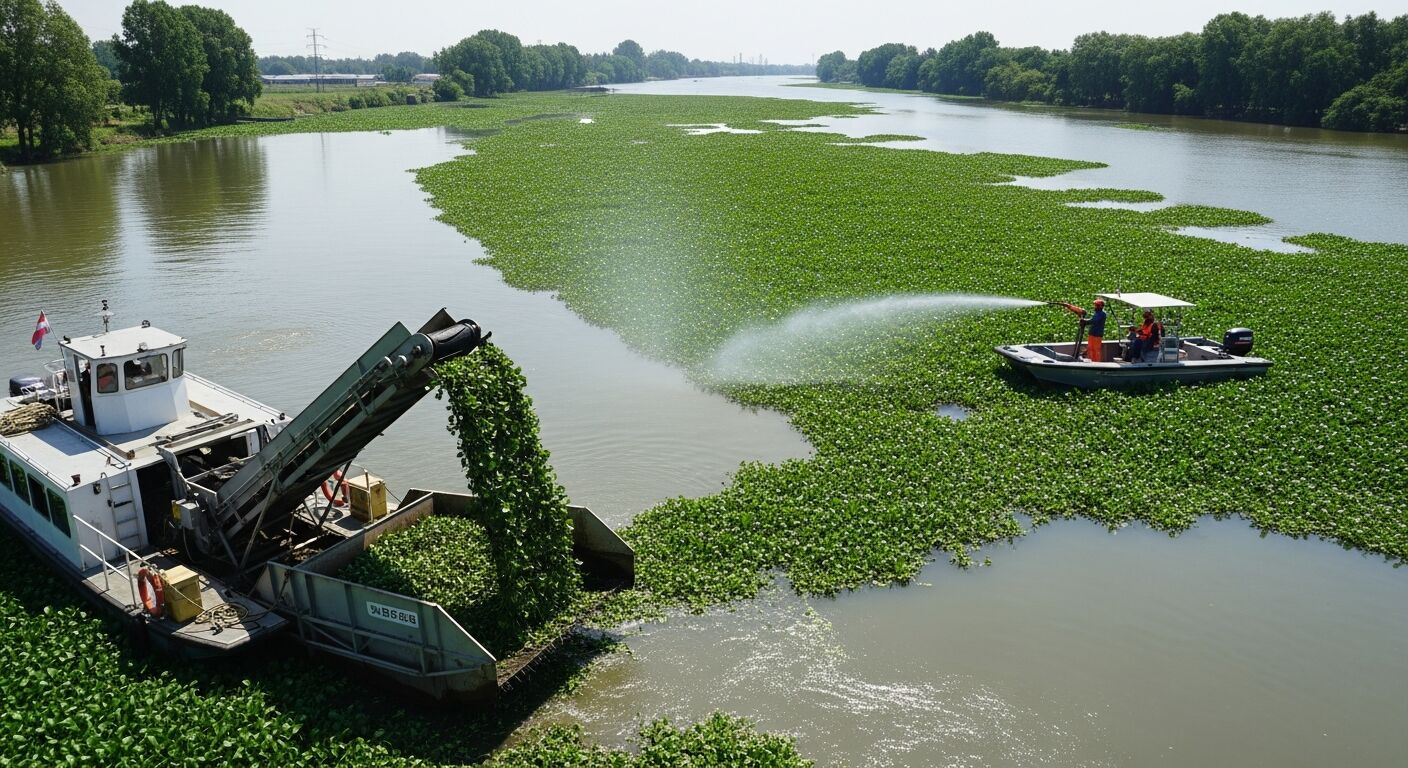
Chemical control is most effective and environmentally responsible when deployed as one element of an integrated management strategy. Sequential or concurrent use of herbicides with mechanical harvesting can reduce the total quantity of chemical applied while achieving more complete biomass removal. Herbicide treatment can also complement biological control by rapidly reducing water hyacinth density to levels where biological agents can establish and exert sustained population pressure. For a broader discussion of ecological consequences and management approaches, see Ecological Impact.
Frequently Asked Questions
What herbicides are used to control water hyacinth?
The three principal herbicides used for water hyacinth control are 2,4-D (a selective auxin herbicide), glyphosate (a broad-spectrum systemic herbicide), and diquat (a contact herbicide). Each has distinct modes of action, efficacy profiles, and environmental considerations.
Is herbicide use safe for aquatic ecosystems?
Herbicide application in aquatic systems carries inherent risks including direct toxicity to non-target organisms and secondary oxygen depletion from decomposing treated biomass. These risks can be managed through careful application, appropriate dosing, and post-treatment monitoring, but they cannot be entirely eliminated.
How quickly do herbicides kill water hyacinth?
Contact herbicides like diquat produce visible effects within 24 to 48 hours, while systemic herbicides like glyphosate and 2,4-D may take one to three weeks to achieve full plant death. The speed of action depends on dosage, environmental conditions, and the size and health of treated plants.
Can herbicides eradicate water hyacinth permanently?
No. Herbicides kill existing standing vegetation but do not affect the persistent seed bank in sediments, which can remain viable for up to 20 years. Repeated applications and integration with other control methods are necessary for sustained population management.
Are there restrictions on using herbicides near drinking water?
Yes. Regulatory agencies establish maximum permissible concentrations for aquatic herbicides in potable water supplies. Treatment near drinking water intakes is subject to strict regulatory oversight, application rate limits, and mandatory post-treatment water quality monitoring.
Explore Related Topics
Chemical control works best as part of an integrated strategy. These related articles provide important context on the species and complementary management approaches.
- What Is Water Hyacinth? — An introduction to the species targeted by herbicide programs
- Ecological Impact of Water Hyacinth — The environmental damage that motivates chemical intervention
- Mechanical Control of Water Hyacinth — Physical removal methods often paired with herbicide application
- Biological Control of Water Hyacinth — Biocontrol agents that provide sustained suppression after chemical treatment
- Reproduction and Spread of Water Hyacinth — Why seed banks and regrowth limit herbicide-only approaches
Scientific References
- Langeland, K. A. et al. (2012). Biology and Control of Aquatic Plants. Aquatic Ecosystem Restoration Foundation.
- Netherland, M. D. (2009). Chemical control of aquatic weeds. In Biology and Control of Aquatic Plants, AERF, pp. 65–78.
- Gettys, L. A., Haller, W. T., & Bellaud, M. (2014). Biology and Control of Aquatic Plants: A Best Management Practices Handbook. 3rd ed. AERF.
- Center, T. D. et al. (2002). Biological control of water hyacinth under conditions of maintenance management. Biological Control, 23(1), 109–123.
- Gibbons, M. V. et al. (1994). Herbicide Manual. Washington State Department of Ecology.
References compiled from peer-reviewed and institutional sources.
Related Research
Harvesting systems, operational constraints, biomass handling, disposal, and regrowth management.
Weevils and other biocontrol agents, mechanisms, success factors, limitations.
Plant anatomy, buoyancy adaptations, roots, flowers, and physiology of water hyacinth.