Biological Control of Water Hyacinth
Key Takeaways
- Classical biological control uses host-specific natural enemies from the plant's native range to suppress invasive populations.
- The weevils Neochetina bruchi and Neochetina eichhorniae are the most widely deployed and successful biocontrol agents for water hyacinth.
- Additional agents include the moth Niphograpta albiguttalis and the fungal pathogen Cercospora piaropi.
- Biological control does not eradicate the target species but reduces populations to ecologically and economically tolerable levels.
- Effectiveness is influenced by climate, nutrient availability, agent establishment success, and complementary management actions.
- Biological control is the most sustainable long-term management strategy when integrated with mechanical and chemical methods.
Introduction
Classical biological control represents the most sustainable and cost-effective long-term management strategy for Eichhornia crassipes in tropical and subtropical freshwater systems. The approach involves the deliberate introduction of host-specific natural enemies — primarily arthropod herbivores and fungal pathogens — from the plant's native range in South America to suppress invasive populations in introduced ranges. Biological control programs for water hyacinth have been implemented in more than 30 countries since the 1970s, with varying degrees of success depending on climatic conditions, nutrient regimes, and the integration of biocontrol with complementary management methods. For background on the species, see What Is Water Hyacinth?.
Primary Biological Control Agents
Neochetina Weevils
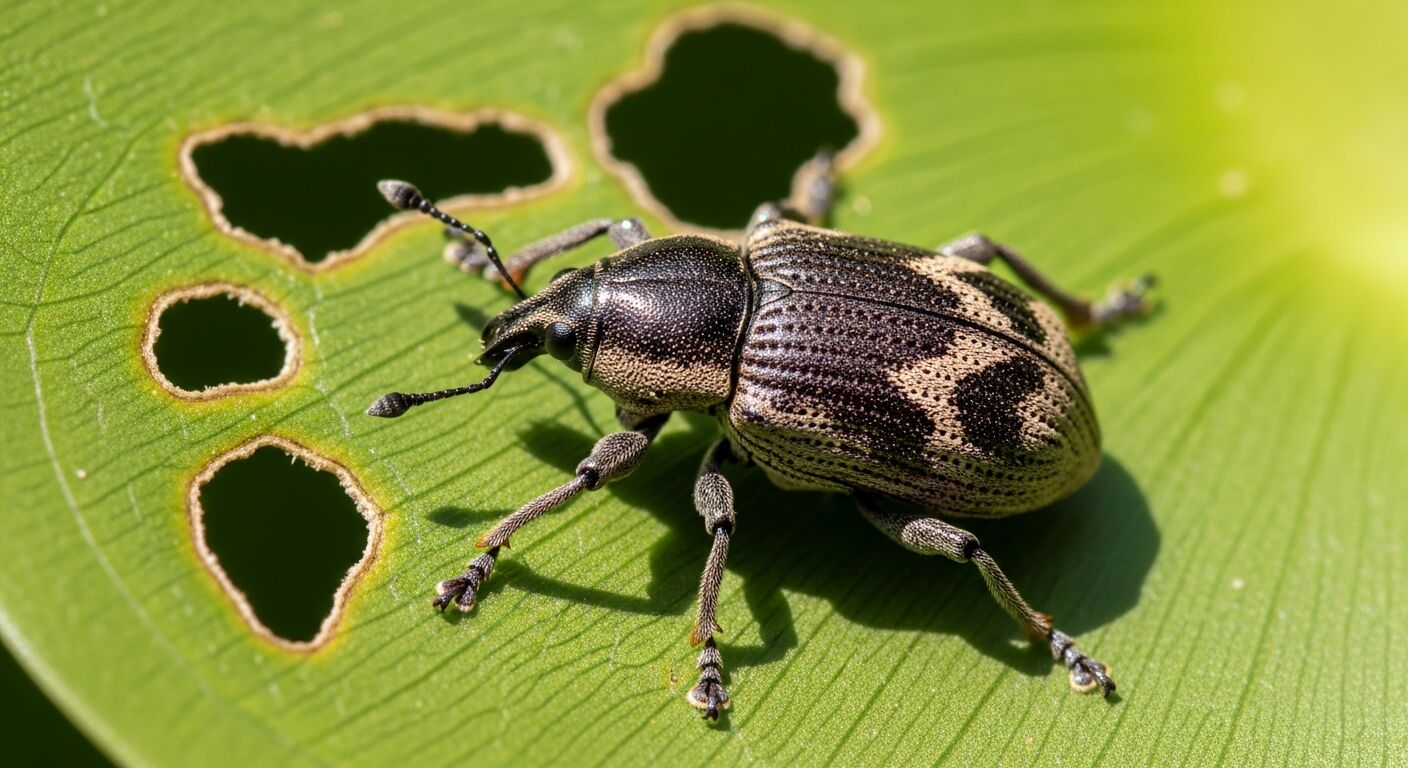
The two chevroned water hyacinth weevils, Neochetina bruchi Hustache and Neochetina eichhorniae Warner (Coleoptera: Curculionidae), are the most widely released and extensively studied biocontrol agents for E. crassipes. Both species are native to South America, where they co-occur with water hyacinth in its natural habitat.
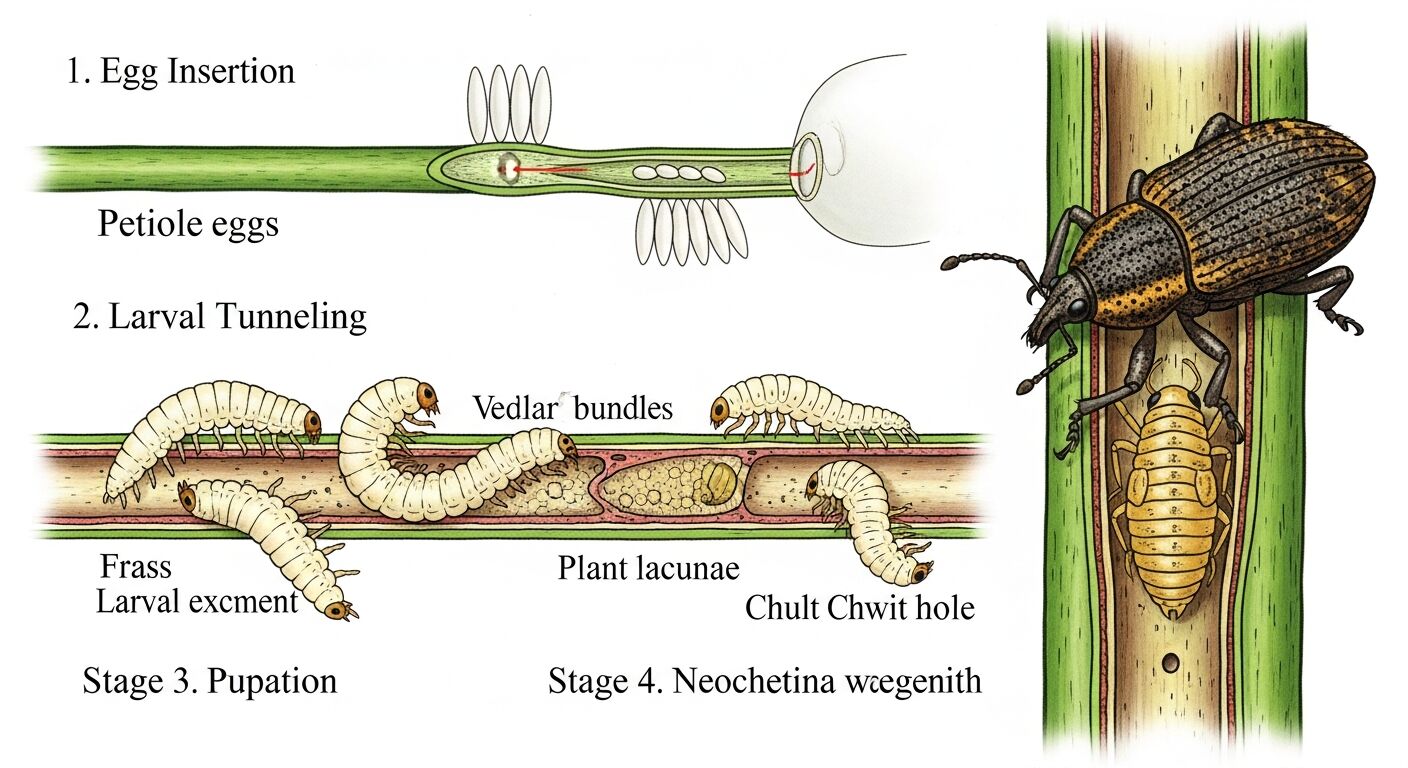
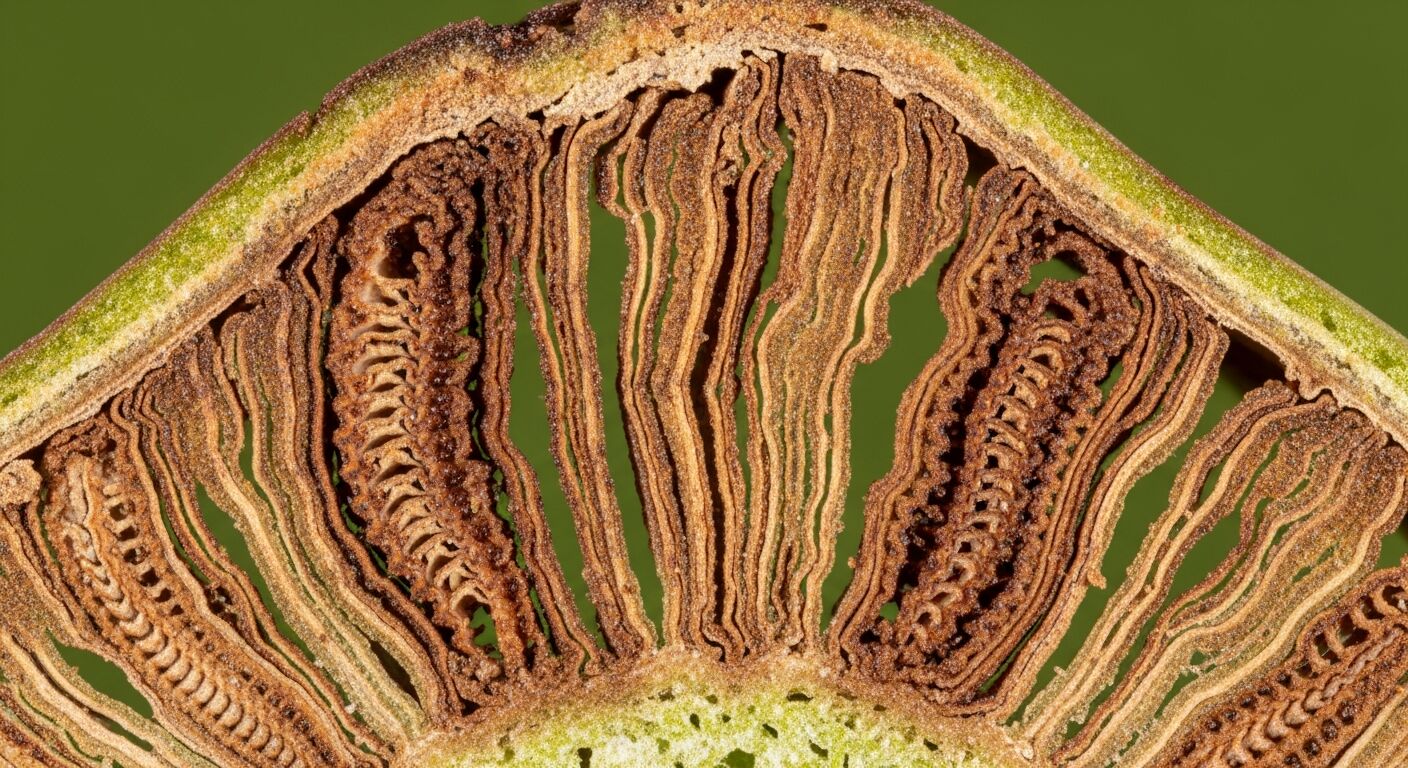
Adult weevils feed on the epidermis and mesophyll tissues of water hyacinth leaves, creating characteristic feeding scars that reduce photosynthetic capacity and provide entry points for secondary fungal infections. Female weevils oviposit into petiole tissues, where larvae develop within tunnels excavated through the aerenchyma, disrupting the structural integrity and buoyancy of the petioles. The combined effects of adult feeding and larval tunneling reduce plant vigor, decrease reproductive output, and ultimately suppress population growth rates.
Neochetina eichhorniae tends to be more cold-tolerant than N. bruchi and may perform better in subtropical regions, while N. bruchi is generally more effective in equatorial tropical environments. Both species are highly host-specific, feeding and reproducing exclusively on Eichhornia species, and extensive pre-release host specificity testing has confirmed minimal risk to non-target vegetation.
Niphograpta albiguttalis
The water hyacinth moth, Niphograpta albiguttalis Warren (Lepidoptera: Crambidae), is a secondary biocontrol agent native to South America. Larvae feed on the growing points and petioles of water hyacinth plants, causing tissue damage that reduces growth and reproductive output. The moth has been released in several countries, including the United States, Australia, and parts of Africa, with moderate success.
The effectiveness of N. albiguttalis is influenced by predation pressure from generalist predators in the introduced range, which may suppress moth populations below levels required for significant host plant impact. In regions where predation is low and climatic conditions are favorable, the moth can contribute meaningfully to integrated biological control programs.
Cercospora piaropi
The fungal pathogen Cercospora piaropi Tharp (Ascomycota: Mycosphaerellaceae) causes leaf spot disease in water hyacinth, producing necrotic lesions that reduce photosynthetic leaf area and plant vigor. The pathogen occurs naturally in the native and introduced ranges of water hyacinth and has been evaluated as a mycoherbicide — a biological control agent applied in augmentative releases rather than through classical self-sustaining introduction.
Field trials with C. piaropi have demonstrated measurable reductions in water hyacinth biomass when the pathogen is applied at high inoculum concentrations under conditions of high humidity and moderate temperatures. However, the practical utility of mycoherbicidal application is limited by the cost of inoculum production, the requirement for favorable environmental conditions, and the incomplete suppression of host plant populations.
Emerging Agents
Research continues to identify additional biocontrol candidates from the native range of water hyacinth. Species under investigation include the mirid bug Eccritotarsus catarinensis, which has been released in South Africa with promising early results, and additional fungal pathogens with potential for synergistic interaction with existing arthropod agents.
Mechanism of Impact
Direct Tissue Damage
The cumulative feeding damage inflicted by biocontrol agents reduces the photosynthetic capacity, structural integrity, and reproductive output of water hyacinth plants. Adult weevil feeding scars decrease effective leaf area, while larval tunneling in petioles reduces buoyancy, disrupts vascular transport, and weakens the structural support of the leaf canopy. Plants under sustained biocontrol pressure exhibit reduced growth rates, smaller rosette sizes, and diminished stolon production.
Stress Interactions
The feeding wounds created by arthropod biocontrol agents serve as entry points for secondary pathogens, including Cercospora and other fungal species. This synergistic interaction between herbivory and disease amplifies the total stress imposed on the host plant, accelerating the decline of individual plants and the overall population. The combination of arthropod and pathogen agents is generally more effective than either type of agent deployed alone.
Population-Level Effects
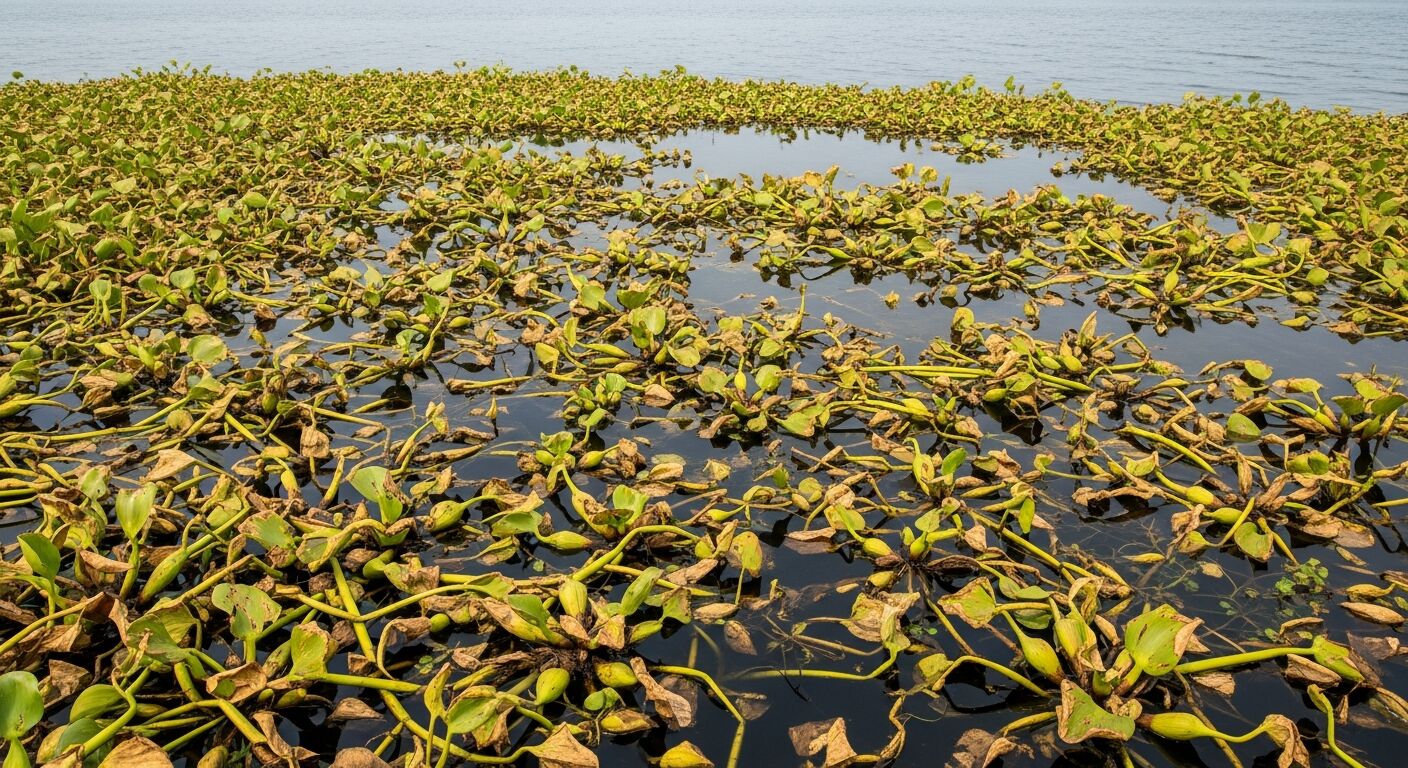
At the population level, sustained biocontrol pressure shifts the competitive balance between water hyacinth and native vegetation, reducing the dominance of the invasive species and creating opportunities for the recovery of native macrophyte communities. The time scale over which population-level effects become apparent is typically three to ten years, reflecting the gradual buildup of biocontrol agent populations and the incremental accumulation of stress on the host plant.
Long-Term Population Suppression
Biological control does not achieve eradication of water hyacinth. Rather, the objective is to reduce the target population to levels that are ecologically and economically tolerable. Once biocontrol agent populations establish and reach effective densities, they provide sustained, self-perpetuating suppression that continues without further human intervention. This makes biological control uniquely cost-effective over long time horizons compared with mechanical and chemical methods that require ongoing operational expenditure.
The time required for biocontrol agents to reach effective population densities — typically several years — means that biological control is not a rapid-response tool. In situations requiring immediate biomass reduction, mechanical or chemical methods are necessary as initial interventions, with biological control providing sustained long-term suppression.
Factors Influencing Success
Climate
Temperature is the most important climatic factor affecting biocontrol agent performance. Neochetina weevils are most active and reproductive at temperatures between 25 and 30 degrees Celsius, with reduced activity below 15 degrees Celsius. In subtropical regions where winter temperatures limit agent activity, water hyacinth may recover growth during warm seasons before biocontrol populations can rebuild.
Nutrient Availability
High nutrient availability in eutrophic water bodies can partially offset the damage caused by biocontrol agents by enabling the host plant to compensate for tissue loss through accelerated growth. In heavily polluted systems, water hyacinth may maintain dense populations despite sustained biocontrol pressure, underscoring the importance of nutrient management as a complementary intervention.
Integration with Other Methods
Biological control achieves optimal results when integrated with mechanical and chemical control methods within a coordinated management framework. Mechanical removal can rapidly reduce biomass to levels that facilitate biocontrol agent establishment, while biocontrol agents provide sustained population suppression between mechanical interventions. For a broader discussion of management approaches, see Mechanical Control and Chemical Control.
Advantages and Limitations
Biological control offers a distinct profile of strengths and constraints compared with other management approaches for water hyacinth.
| Factor | Biological Control | |--------|--------------------| | Speed | Slow (months to years) | | Cost | Low long-term maintenance | | Environmental risk | Minimal when host-specific | | Seed bank impact | Indirect only | | Sustainability | High once agents establish |
Frequently Asked Questions
What insects are used to control water hyacinth?
The most widely used biocontrol agents are two South American weevil species, Neochetina bruchi and Neochetina eichhorniae. The moth Niphograpta albiguttalis and the mirid bug Eccritotarsus catarinensis are also used in some regions.
How do biocontrol weevils damage water hyacinth?
Adult weevils feed on leaf surfaces, creating scars that reduce photosynthetic capacity. Females lay eggs in petioles where larvae tunnel through aerenchyma tissue, reducing buoyancy and structural integrity. These wounds also allow secondary fungal infections to enter.
How long does biological control take to work?
Population-level effects typically become apparent over three to ten years as biocontrol agent populations build up and cumulative stress on the host plant accumulates. Biological control is a long-term strategy, not a rapid-response tool.
Is biological control safe for native plants?
Yes. Biocontrol agents for water hyacinth are rigorously screened through host-specificity testing before release. Neochetina weevils are highly host-specific, feeding and reproducing exclusively on Eichhornia species, with no significant impact on non-target native vegetation.
Can biological control eliminate water hyacinth completely?
No. Biological control reduces water hyacinth populations to ecologically and economically tolerable levels but does not achieve eradication. The persistent seed bank and residual vegetative material maintain the host population at low density, which in turn supports the continued presence of the biocontrol agent.
Explore Related Topics
Biological control is most effective when informed by a thorough understanding of the target species and integrated with other management methods. Explore these related articles.
- What Is Water Hyacinth? — A general introduction to the target species
- Ecological Impact of Water Hyacinth — The ecosystem damage that biocontrol programs aim to mitigate
- Biology of Water Hyacinth — The plant anatomy that biocontrol agents exploit
- Mechanical Control of Water Hyacinth — Complementary physical removal used alongside biocontrol
- Chemical Control of Water Hyacinth — Herbicide methods that can prepare sites for biocontrol establishment
Related Research
Aquatic herbicide concepts, timing, selectivity, safety, and integrated planning.
Harvesting systems, operational constraints, biomass handling, disposal, and regrowth management.
Plant anatomy, buoyancy adaptations, roots, flowers, and physiology of water hyacinth.