Mechanical Control of Water Hyacinth
Key Takeaways
- Mechanical control provides immediate, visible reduction of water hyacinth biomass in localized areas.
- Methods include manual removal, conveyor-belt harvesters, aquatic weed cutters, and dredging equipment.
- High cost, labor intensity, and rapid regrowth from fragments and seed banks limit long-term efficacy.
- Biomass disposal presents significant logistical and environmental challenges, particularly at scale.
- Mechanical methods are most effective when integrated with biological and chemical control strategies.
- Early intervention on small infestations yields substantially better cost-effectiveness ratios.
Introduction
Mechanical control of water hyacinth involves the physical removal of plant biomass from infested water bodies using manual labor, specialized aquatic harvesting equipment, or heavy machinery. As the most immediately visible form of intervention, mechanical control is widely employed by government agencies, water management authorities, and community organizations across affected regions. However, the effectiveness of mechanical methods is constrained by operational logistics, cost, and the remarkable regenerative capacity of Eichhornia crassipes. This article provides an overview of mechanical control techniques, their operational requirements, limitations, and role within integrated management frameworks. For background on the species, see What Is Water Hyacinth?.
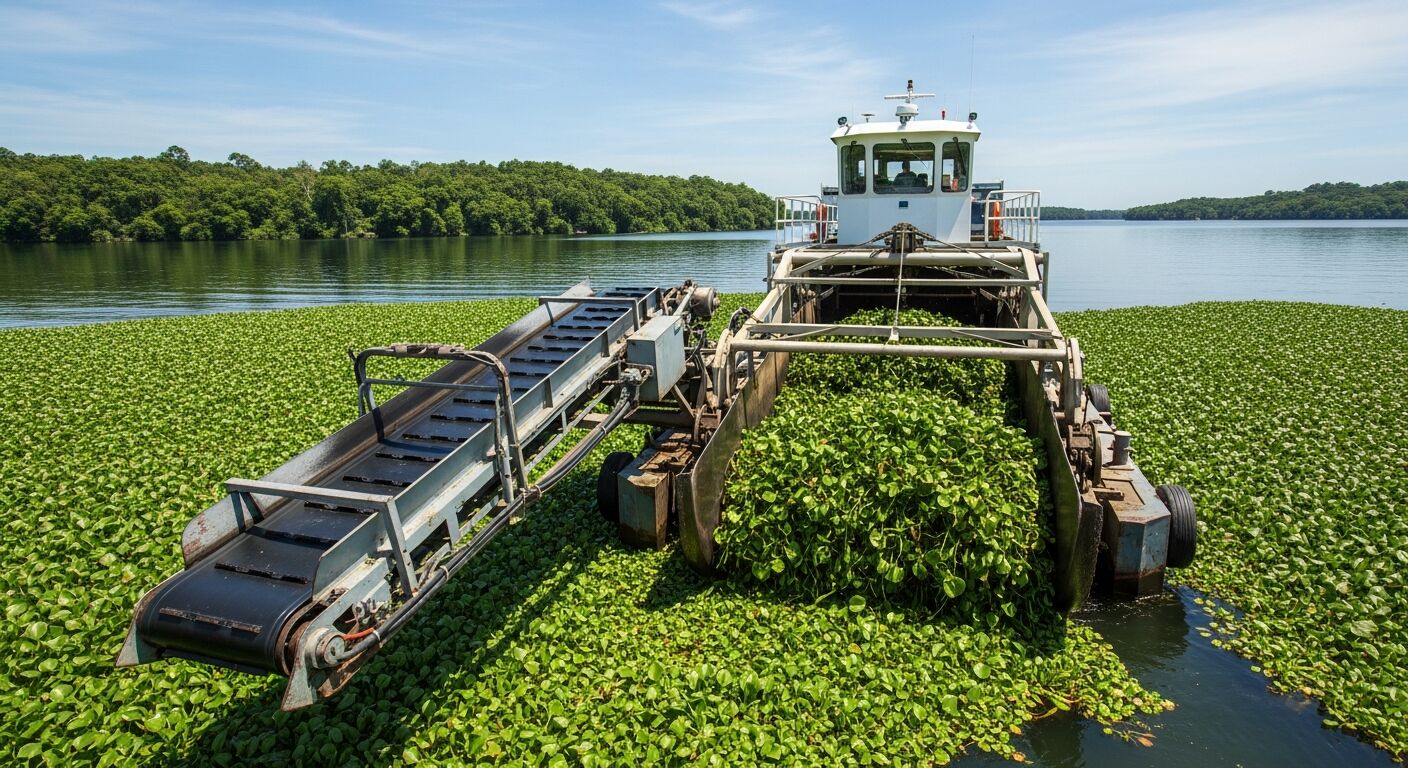
Manual Removal
Community-Based Approaches
In many developing countries, manual removal of water hyacinth by community labor remains the most accessible form of control. Workers use hand tools, rakes, pitchforks, and nets to extract floating vegetation from shoreline areas, boat landings, and irrigation canal intakes. Manual removal is labor-intensive and limited in scale but can be effective for maintaining critical access points and managing small, localized infestations.
Community-based programs offer the additional benefit of local employment and stakeholder engagement, fostering a sense of ownership and sustained commitment to water hyacinth management. However, the physical demands and health risks associated with prolonged work in infested water bodies — including exposure to disease vectors and contaminated water — must be carefully managed.
Limitations of Manual Methods
Manual removal is inherently limited by the rate at which workers can extract biomass relative to the rate of vegetative regrowth. In warm, nutrient-rich environments where water hyacinth doubling times may be as short as 6 to 18 days, manual removal efforts can be rapidly overwhelmed by new growth unless sustained at high intensity over extended periods.
Aquatic Harvesters
Specialized aquatic weed harvesters have been developed for the large-scale removal of floating vegetation. The most common designs employ conveyor-belt systems that lift plant material from the water surface onto onboard collection barges. Other equipment types include aquatic weed cutters that sever submerged root masses, suction dredges that vacuum floating and decomposing biomass, and amphibious excavators capable of operating in shallow wetland environments.
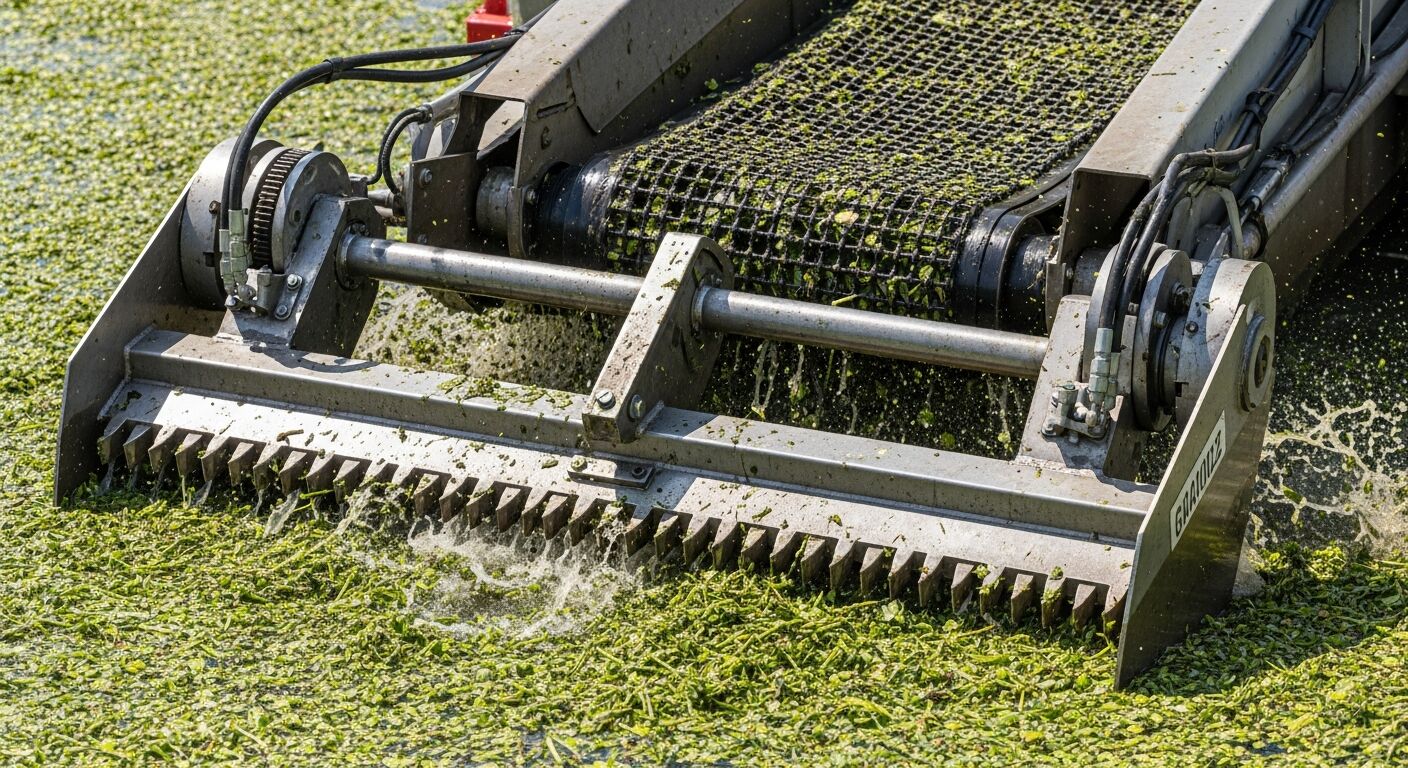
Modern harvesters can process 50 to 200 tons of wet biomass per day, depending on equipment capacity, infestation density, and site accessibility. However, operational throughput is frequently constrained by the need for frequent offloading of collected material, equipment maintenance, and navigation challenges in densely infested areas.
Operational Constraints
Mechanized harvesting faces several practical limitations. Equipment access is restricted in shallow, rocky, or heavily vegetated water bodies where harvesters cannot maneuver effectively. Transportation of harvested biomass from the collection site to disposal or processing facilities requires substantial logistical support, including trucks, trailers, and designated unloading areas. Fuel costs, equipment maintenance, and operator wages contribute to high per-hectare removal costs that often exceed the financial capacity of affected communities.
The fragmentation of water hyacinth biomass during mechanical harvesting is a significant concern. Plant fragments produced during cutting and collection operations are viable propagules capable of drifting to uninfested areas and establishing new populations. Containment booms and collection screens are sometimes deployed to capture fragments, but complete prevention of dispersal during mechanized operations is rarely achieved.
Excavation and Shoreline Removal
In shallow water bodies, shoreline margins, and wetland environments where conventional harvesters cannot operate, amphibious excavators and dragline equipment provide alternative removal capability. These machines are equipped with wide tracks or pontoons that distribute weight across soft substrates, allowing them to access areas that would be impassable for wheeled or standard tracked vehicles.
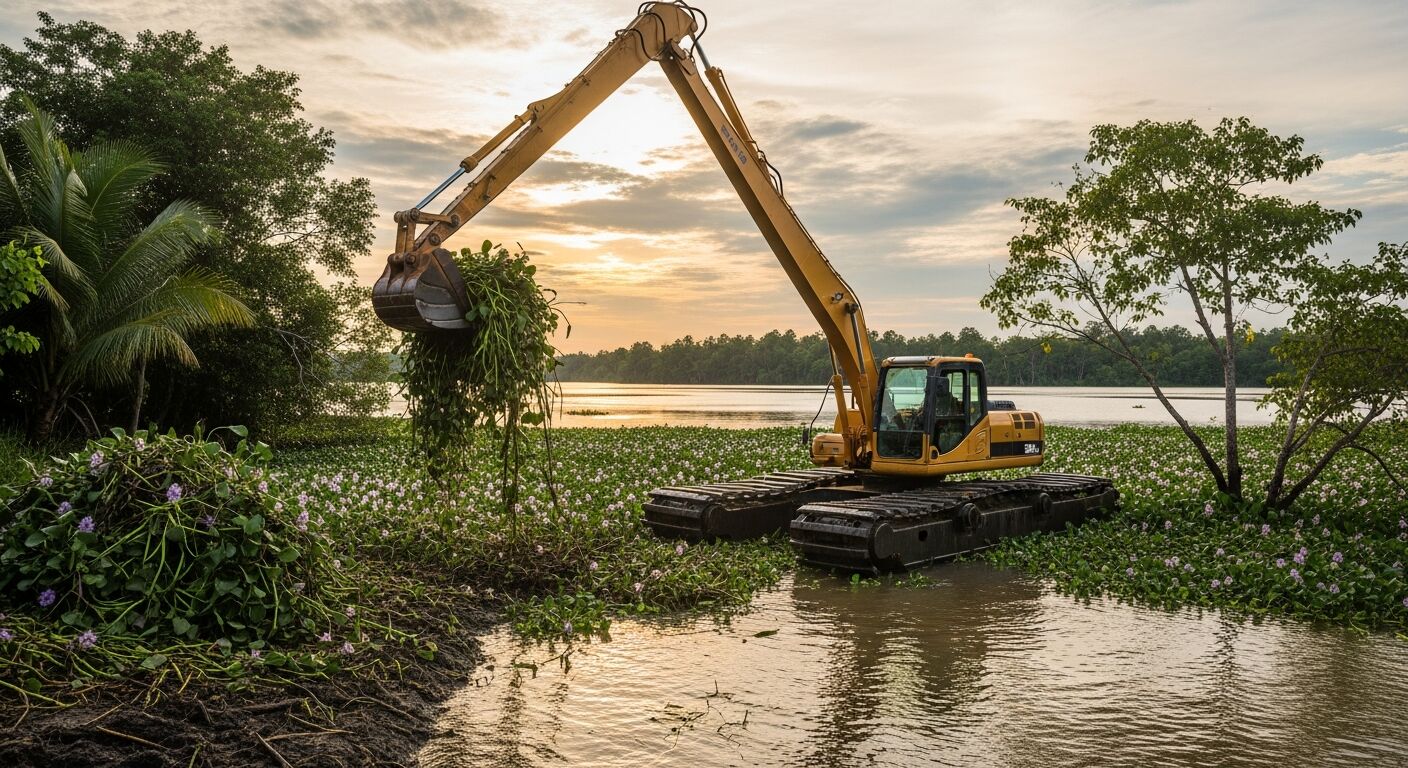
Excavation-based removal is particularly effective for clearing dense root masses and accumulated sediment-bound biomass that floating harvesters cannot reach. However, the process can cause significant disturbance to benthic substrates, riparian zones, and shoreline habitats, necessitating careful site assessment and operational planning to minimize ecological damage.
Biomass Disposal and Logistics
The disposal of harvested water hyacinth biomass presents substantial logistical and environmental challenges. Fresh water hyacinth is approximately 95 percent water by weight, making transport costly and energy-intensive. Decomposing biomass generates offensive odors, attracts insects, and may leach nutrients and contaminants into soils and groundwater if improperly managed.
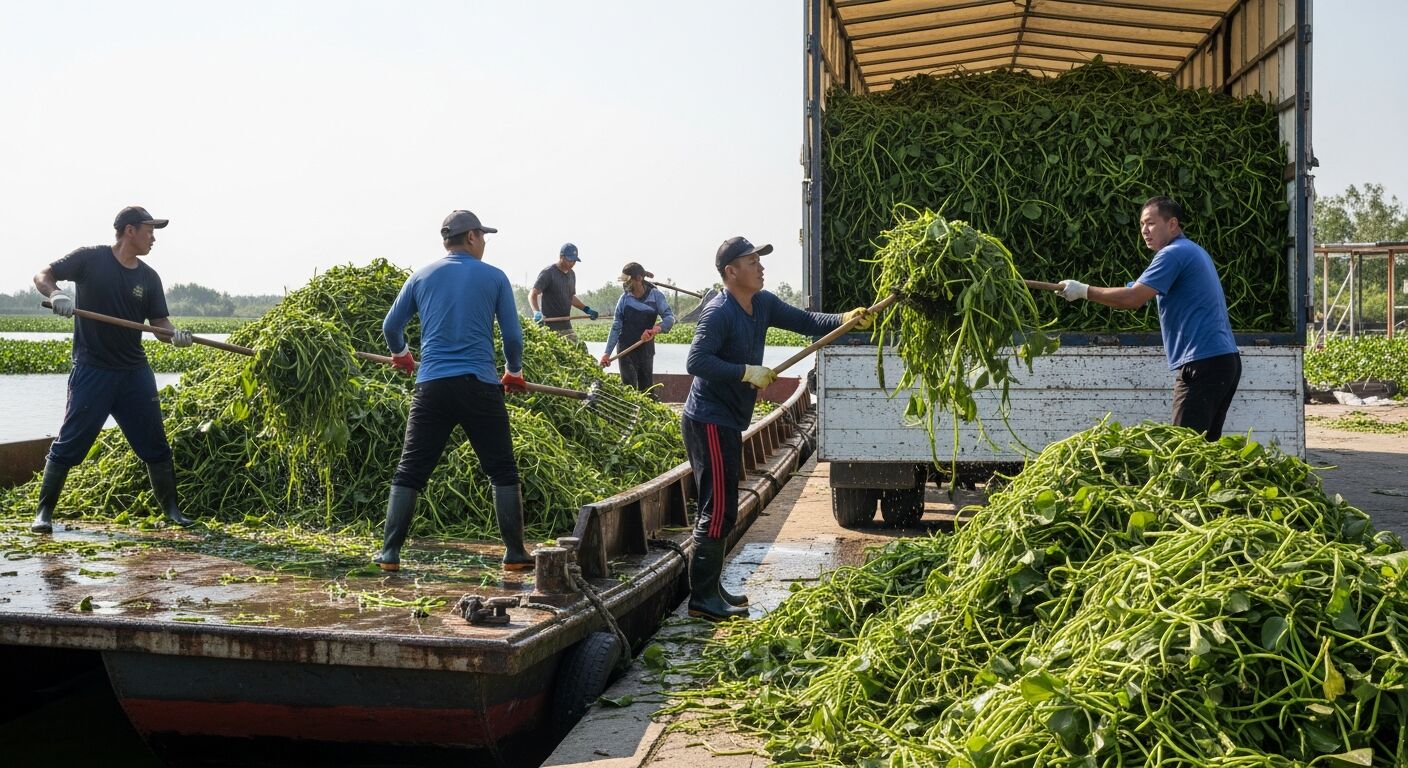
Landfilling of water hyacinth biomass is the most common disposal method but is increasingly constrained by limited landfill capacity and environmental regulations. Composting offers an alternative pathway, converting harvested biomass into soil amendments, though the process requires several months and significant processing area.
Utilization Opportunities
Research into productive uses for harvested water hyacinth biomass has explored applications including compost and mulch production, biogas generation through anaerobic digestion, animal fodder supplementation, fiber extraction for paper and textile production, and biochar production through pyrolysis. While these applications demonstrate technical feasibility, their economic viability at operational scale remains limited by the high water content of fresh biomass, variable nutrient and contaminant profiles, and the absence of established markets for water hyacinth-derived products.
Operational Effectiveness
The effectiveness of mechanical control depends on timely, repeated intervention and the completeness of biomass removal. Under optimal conditions, a well-resourced mechanical harvesting program can reduce surface coverage by 80 to 95 percent within a single operation. However, regrowth from residual fragments, stolon segments, and seed bank germination typically restores pre-treatment biomass levels within weeks to months in tropical environments.
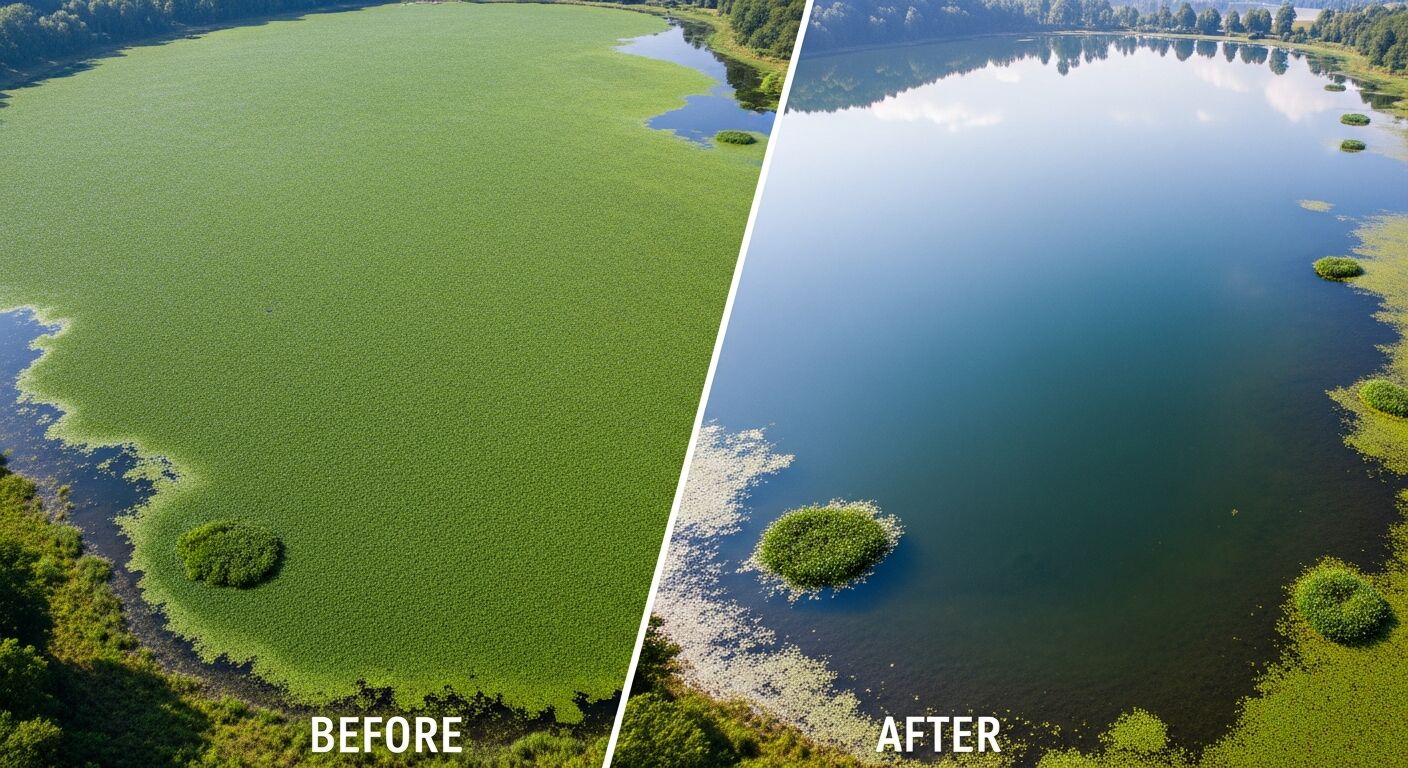
Effective regrowth management requires repeated harvesting operations at intervals determined by the rate of biomass recovery, which is influenced by temperature, nutrient availability, and the completeness of initial removal. In tropical systems, harvesting cycles of two to four weeks may be necessary to maintain water hyacinth at tolerable levels.
Advantages and Limitations
Mechanical control offers distinct advantages over chemical and biological methods in certain contexts, but also carries inherent limitations that constrain its role as a standalone management approach.
| Factor | Mechanical Control | |--------|-------------------| | Speed | Immediate biomass reduction | | Seed bank impact | Does not eliminate sediment seeds | | Environmental impact | No chemical residues | | Cost | High operational cost | | Selectivity | Limited; removes mixed vegetation |
Integration with Other Methods
Mechanical control is most effective when deployed as one component of an integrated management strategy that also includes biological control agents and, where appropriate, targeted herbicide application. Mechanical removal can rapidly reduce biomass to levels that facilitate the establishment and effectiveness of biological control organisms, while biological agents provide sustained, long-term population suppression between mechanical interventions. For detailed discussion of other control approaches, see Biological Control and Chemical Control.
Cost-Effectiveness
The cost of mechanical water hyacinth control varies widely depending on the scale of infestation, equipment availability, labor costs, and disposal logistics. Published estimates range from several hundred to several thousand dollars per hectare per harvesting cycle. Given the need for repeated operations, annual management costs can be substantial, particularly for large water bodies with persistent infestations.
Cost-effectiveness improves markedly when mechanical intervention is applied early to small, newly detected infestations before exponential growth produces unmanageable biomass volumes. This economic reality underscores the importance of surveillance, early detection, and rapid response as foundational elements of water hyacinth management programs.
Frequently Asked Questions
How effective is mechanical removal of water hyacinth?
Mechanical removal provides immediate, visible reduction of water hyacinth biomass but is rarely sufficient as a standalone control method. Rapid regrowth from fragments and seed banks means repeated operations are necessary, often at intervals of two to four weeks in tropical environments.
What equipment is used to harvest water hyacinth?
Common equipment includes conveyor-belt aquatic weed harvesters, aquatic weed cutters, suction dredges, and amphibious excavators. Modern harvesters can process 50 to 200 tons of wet biomass per day, depending on capacity and site conditions.
What happens to the removed water hyacinth?
Harvested biomass is typically disposed of in landfills or composting facilities. Research has explored alternative uses including biogas production, animal fodder, fiber extraction, and biochar production, though commercial-scale utilization remains limited.
Does mechanical removal spread water hyacinth?
Yes, fragmentation during mechanical harvesting can produce viable plant fragments that drift to uninfested areas and establish new populations. Containment booms and collection screens help reduce this risk but cannot eliminate it entirely.
Why is mechanical control so expensive?
High costs result from equipment purchase and maintenance, fuel consumption, labor wages, transportation of harvested biomass, and the need for repeated operations due to rapid regrowth. Early intervention on small infestations is significantly more cost-effective than managing large established populations.
Explore Related Topics
Mechanical control is one piece of the management puzzle. Learn how it fits alongside other approaches and the broader context of water hyacinth invasion.
- What Is Water Hyacinth? — A general introduction to the species
- Ecological Impact of Water Hyacinth — Why intervention is necessary
- Chemical Control of Water Hyacinth — Herbicide-based methods often used alongside mechanical removal
- Biological Control of Water Hyacinth — Long-term suppression through natural enemies
- Reproduction and Spread of Water Hyacinth — The regrowth dynamics that challenge mechanical control efforts
Related Research
Aquatic herbicide concepts, timing, selectivity, safety, and integrated planning.
Weevils and other biocontrol agents, mechanisms, success factors, limitations.
Plant anatomy, buoyancy adaptations, roots, flowers, and physiology of water hyacinth.